.avif)
Picture a downtown site at dawn, where contractors gently swing a 50-foot-long, 2 feet wide and feet deep timber bream into place. Not for building, but a parking structure.
That’s the reality of what's happening in the world of mass timber right now. And to unpack it, we spoke with the Systems Wizard himself, Corey Hokanson, the Design Manager at SmartLam North America.
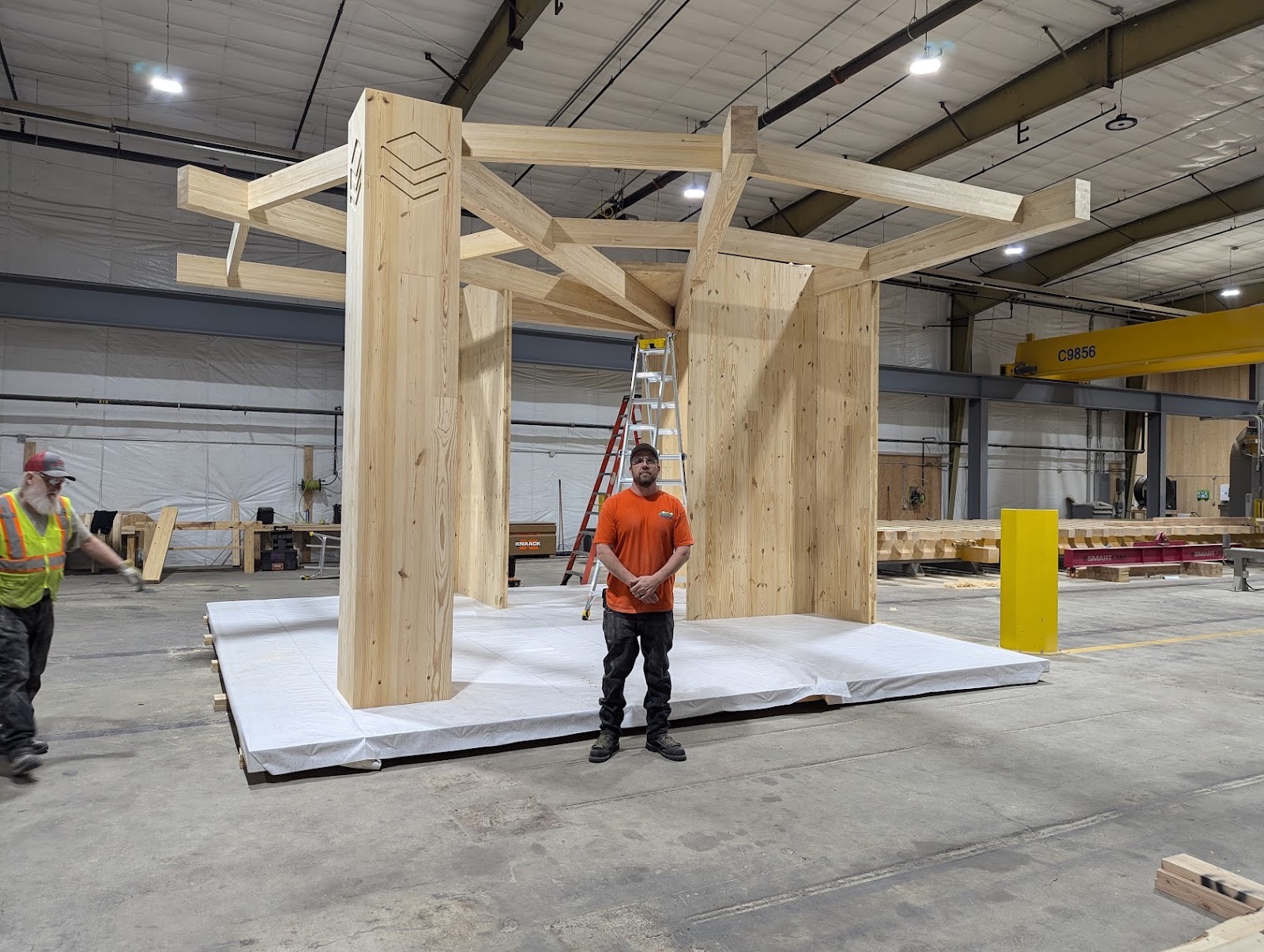
An Industry Scales Up: From Mass to Mega Timber
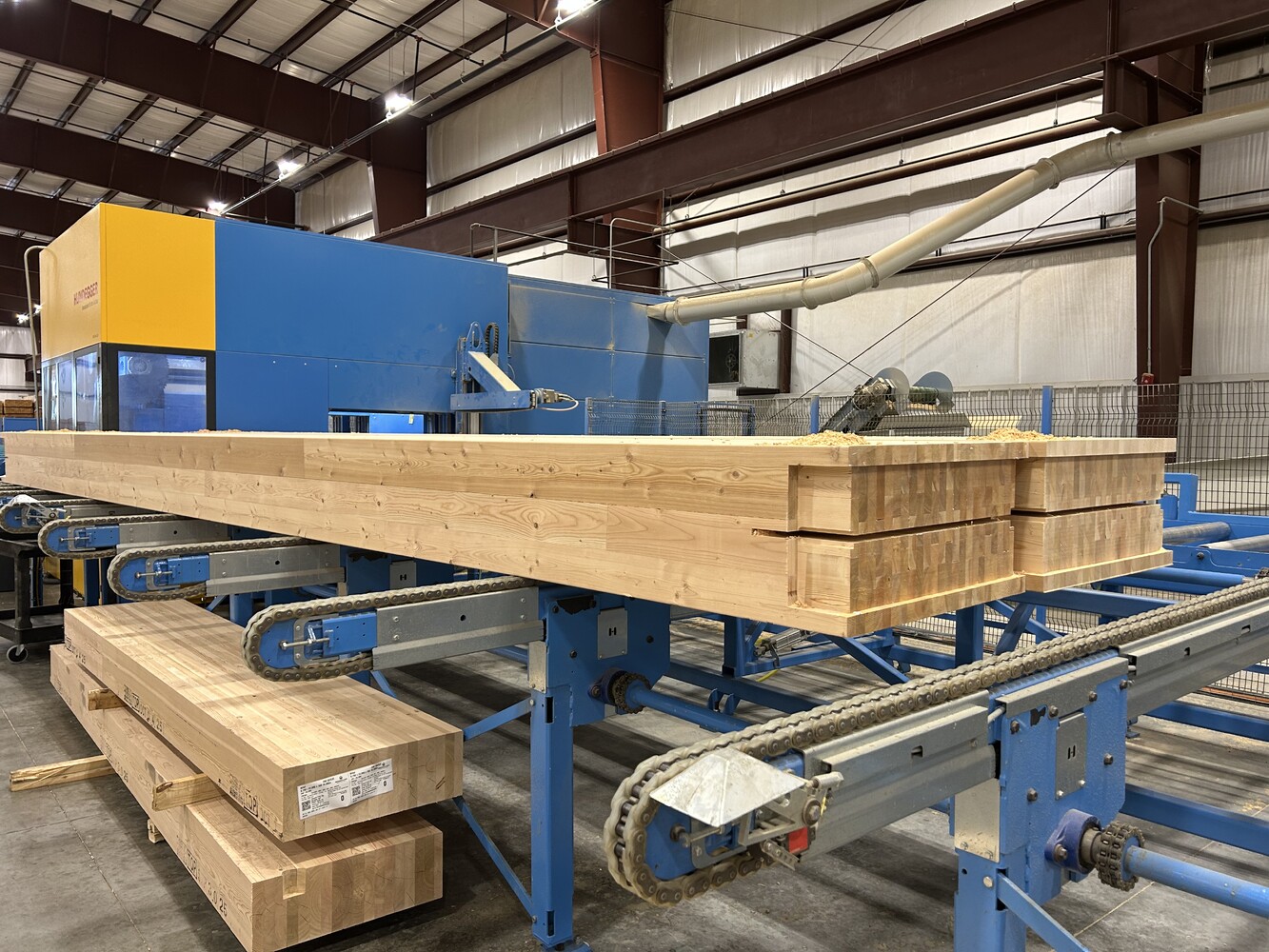
Columns and beams once considered “big” are now growing so large that onlookers knock on them to check if they’re hollow. That’s exactly what happened when SmartLam North America showcased its new 24-inch by 42-inch glulam at a recent conference. They drew immediate curiosity about how glulam could possibly reach such dimensions - and be produced economically. Until recently, achieving a beam two feet wide by up to four feet deep often meant a time-consuming, custom hand-layup process. Now, SmartLam presses in Dothan can turn out these jumbo glulam members seamlessly.
Driving this transformation is a practical desire to manage higher loads and longer spans with fewer pieces, all while addressing fire and sustainability requirements. In Hokanson’s view, “There’s a lot of things that change when you start getting into pieces that big and that heavy.”
One direct technical gain is the potential to reduce overall piece counts—doing away with multiple smaller beams in favor of a single member. Fewer members means fewer connections and labor hours, but it also demands bigger handling equipment and more careful planning. Because single pieces can top 12,000 pounds, oversights in design, sequencing or installation can erode those hoped-for benefits. The industrial leap from “mass” to “mega” marks a moment where “everything has changed in the last couple years,” adding fresh options that simply did not exist at this scale before.
3-Hour Fire Rating: A Bold New Frontier
Not long ago, few imagined that exposed timber could endure three hours of direct fire exposure. Yet Hokanson describes new furnace tests showing mass timber assemblies charring for three hours with “no coatings, no intumescent paint, no drywall wrapping.” During these tests, the timber effectively formed a thick char layer on the surface, protecting an undamaged structural core. He notes, “They put it in a furnace and basically blast it with a blowtorch for three hours… it’s like you threw it in a bonfire.”
From a design perspective, this changes the conversation around heavy timber in spaces that demand ultra-safe, code-driven solutions. It also means teams have a legitimate alternative to expensive encapsulation or the steel and/or concrete typical for high fire-rating assemblies. In tangible terms, using these 3-hour rated timber assemblies frees projects from adding extensive gypsum board or intumescent coatings. The cause-and-effect is straightforward: by allowing enough mass for extended charring, the material retains a stable core, preserves structural performance, and satisfies the code. Hokanson points out the real advantage of timber’s char characteristic: “You figure three hours… that’s a long time… you can get a lot of people, everybody out of a building in three hours.” It’s an endorsement that large wood members are stepping decisively into applications once reserved for concrete or steel.
Podiums and Parking Decks: Challenging Concrete’s Turf
Now, timber can claim spaces long dominated by concrete—like podium levels and parking decks. SmartLam is already fielding designs that swap out concrete beams, slabs, and rebar with 7+ layer CLT and heavy glulam. Hokanson captures the schedule benefit in practical terms:
“I can come drop in these four pieces of timber off the semi-truck in two hours. Or we can sit there and form this all up for the concrete and then put all the rebar in… then we can pour the concrete. Then we can sit around and wait for it to cure….”
That contrast grapples with weeks of site labor, specialized forming and bracing, and the wait time that inevitably follows a wet pour.
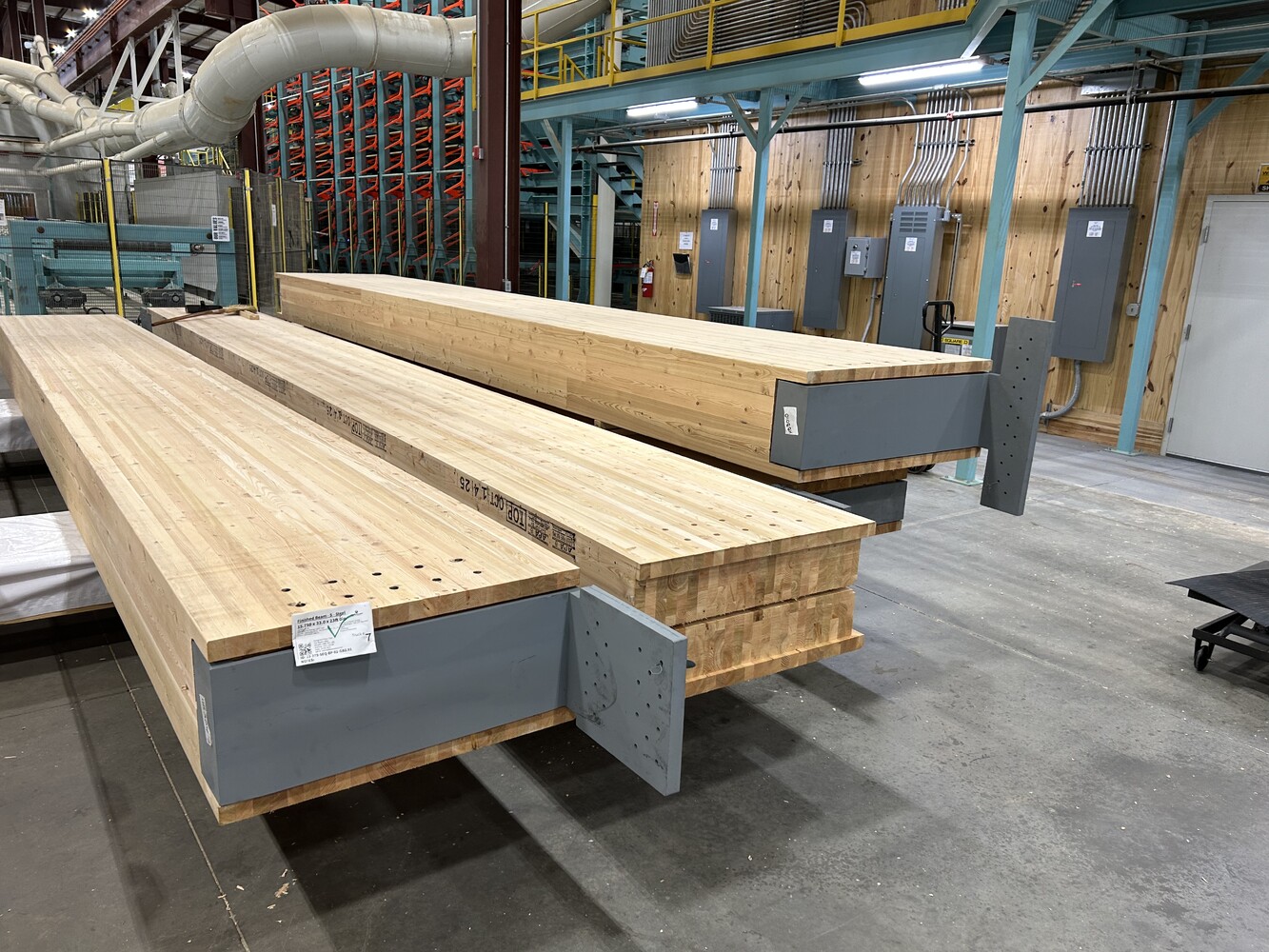
Replacing a conventional podium system (concrete beams plus a concrete deck) with large glulam beams spanned by nine-ply CLT does come with its own unique set of consideration, though. Hokanson describes a project employing 12.5-inch-thick CLT panels: “That piece weighs 12,000 lbs.… we better make sure it’s in the right order on the truck,” emphasizing the need for careful sequencing and onsite logistics.
Mastering the Logistics Puzzle
Enormous structural members offer clear benefits, but only if carefully choreographed from manufacturing to final install. It starts the moment a 12,000-pound panel is pressed and ends with that panel being correctly sequenced on-site. Hokanson warns, “If you get partway through putting it together and you’re like, ‘Oh, I should have put that one in first,’ now I got to go pull three pieces out… you’re losing all that time schedule savings.”
A concrete deck might allow continuous pour after pour without worrying about piece-by-piece staging. Timber, however, arrives “basically a puzzle piece,” so just-in-time sequencing is crucial.
The upside? Mastering that puzzle yields an impressively streamlined crew—“on a mass timber install, you might have five or six people,” Hokanson notes. With fewer trades on-site, the risk of coordination clashes drops. But to keep that advantage, each piece must arrive when needed and in the exact orientation for rigging and lifting into position. For those tackling a podium job or large commercial floorplate, the short yet precise staging can be a major edge—provided the entire supply chain works in lockstep, from the press operator in Dothan to the crane operator on the job site.
The Four-Foot Screw: New Realities for Field Install
Hardly anyone expects to drive a four-foot screw into solid wood, but the new wave of massive beams demands equally massive fasteners. “You’re not going to find a lot of 16-inch screws at your local hardware store,” Hokanson observes. That leads to specialized torque drivers, batteries that can handle heavy loads, and yes, an awareness that if the tool overheats or the screw seizes, installation will be disrupted. “You have to drive it in one go all the way in,” he explains, because if mid-thread cooling occurs, the screw can bind and snap.
The consequences of using the wrong method can be devastating. “Worst case scenario, you’re taking all those screws back out and replacing them all because you voided the warranty… or you broke the screws off,” Hokanson says. In the absolute worst case, snapping a critical fastener inside a beam can require full beam replacement—a cost nobody wants. This scenario flips a standard wood framing approach (laborers with practice at sinking three- or four-inch screws) into a new territory where site managers must plan for specialty equipment, factor in slow-driving drivers, and equip extra drills to cycle in when batteries begin overheating. In short, ignoring the fastener hardware dimension might jeopardize the very speed advantage that large mass timber promises.
Automated Presses Meet Sky-High Loads
No one doubted that big glulam members could be made by hand. But producing them at scale—“a press load of beams every fifteen minutes,” as Hokanson puts it? Utilizing a uniform, factory-tight layup with presses sized for these larger members makes it possible. And more reliable.
Fasteners and connections can fail if there are gaps in the lamellas, something mitigated with a consistently dense beam. Hokanson explains, “Simpson Strong Tie has an actual study and a formula for how much you have to reduce the capacity if there’s gaps between boards,” referencing the risk with hand layup members of this size. The new automated llines mitigate that capacity drop. The result is more reliable performance, higher design loads, and a confidence that timber can compete head-to-head with steel or concrete in major structural roles. As Hokanson says of the new system, “We can make anything in between this and this,” meaning wide, deep, or a combination of both, all without the manual constraints of older methods.
Pushing Off-Site Construction Principles Further
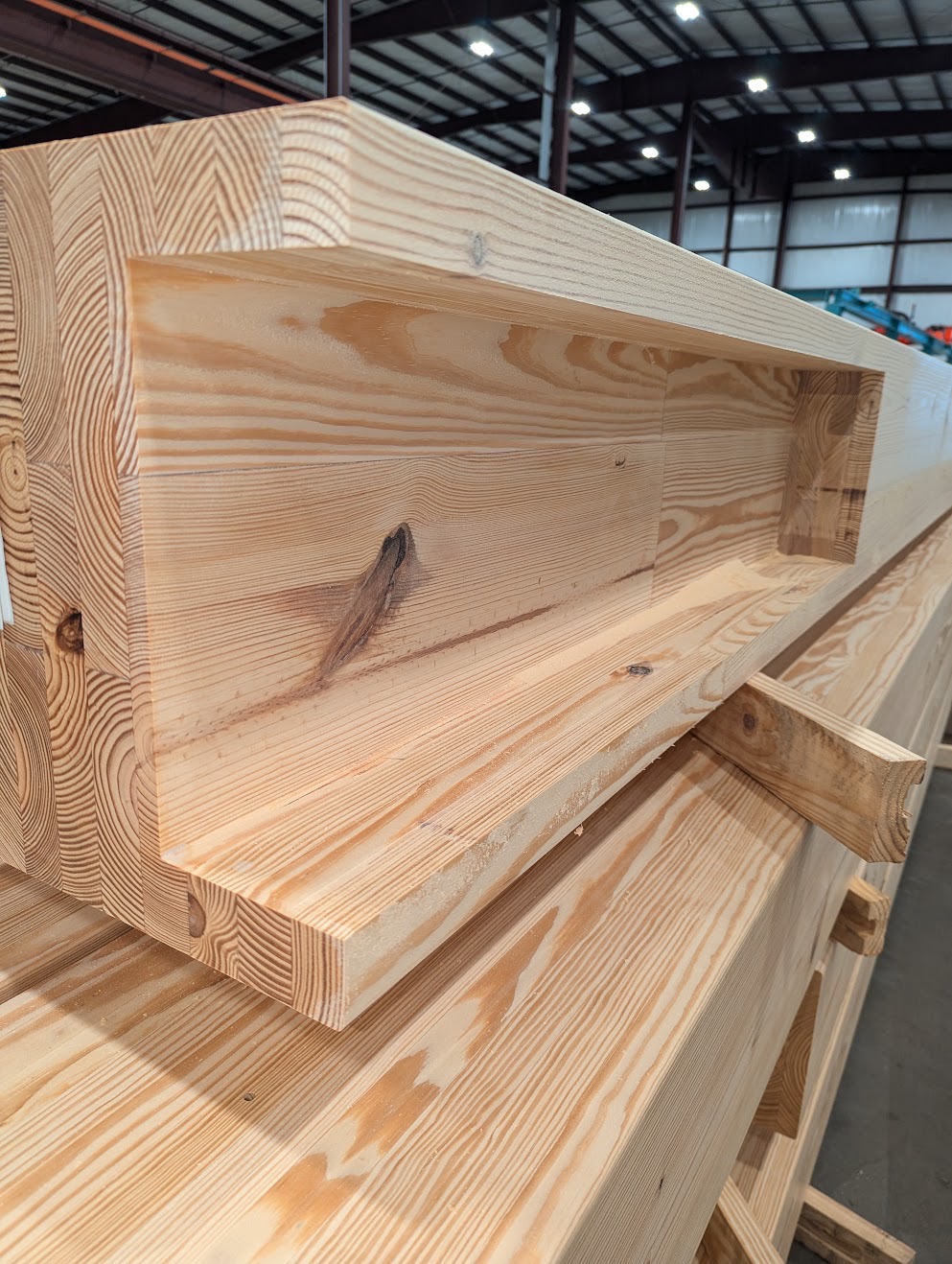
Massive beams magnify a core principle of mass timber: “You really don’t want to have to do that” on site, Hokanson quips when describing the labor of drilling a hole through 42 inches of solid wood. A routine task might become an hour-long ordeal, requiring two people, multiple drill bits, and a shop vacuum to clear sawdust along the way.
The obvious takeaway: incorporate all cuts, holes, and service runs into the CNC stage. “If that shows up in the wrong order and you have to move that somewhere… how do you move that?” quickly transforms from a rhetorical question to a budget-busting predicament.
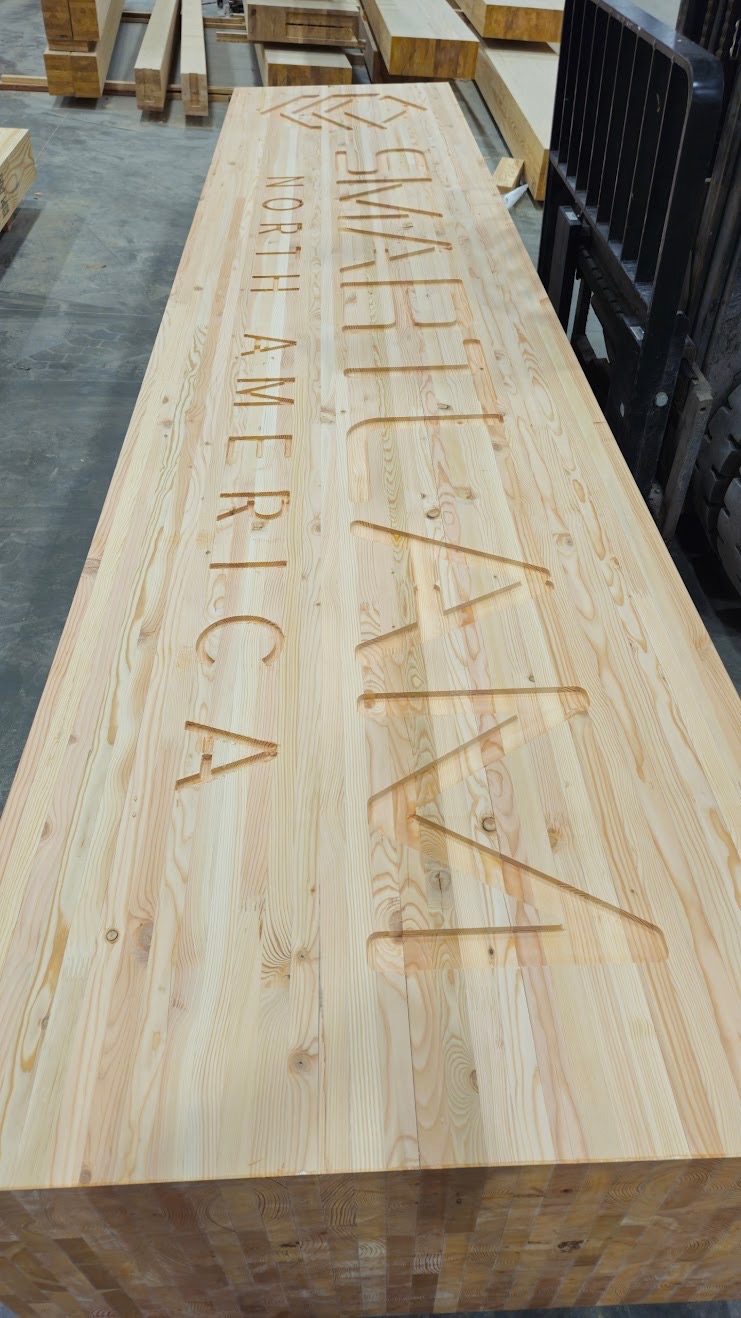
In a world where beams can approach 4 feet in depth, that coordination starts early and runs deep. Whether it’s a parking deck or an office building with hidden conduit, everything from the largest structural connection to the smallest wire chase needs to be pinned down before the press and the CNC do their work.
Future of Mega Mass Timber
“Don’t assume that we can’t do something,” Hokanson says, stressing that many long-discussed but previously unfeasible mass timber ideas deserve revisiting.
The giant beams are here—and they are more than a novelty. “Everything has changed in the last couple years… we’ve got bigger screws, bigger fasteners, bigger brackets… let’s just do more of it.” Then, with that, he closes the door on doubt and opens it to a new scale of timber.
.png)
Tired of Mass Timber Challenges Derailing Your Projects? Learn How to De-Risk & Deliver Them.
Lead mass timber projects with confidence — and leave delays, redesigns, and budget blowups behind.
✅ Solve early-stage design, sourcing, insurance, permitting, code & cost hurdles before they derail your project.
✅ Find technical answers on design, detailing, procurement, embodied carbon ROI, hybrid systems & more.
✅ Build relationships with developers, GCs, architects, and engineers shaping mass timber’s future.
Get your ticket— and get the insights, skills, and network to deliver mass timber projects successfully.

Latest episodes
.png)
How to Make Mass Timber Compete on Cost in Private Development w/ Josh Dortzbach of FOREFRONT Structural Engineers
Josh Dortzbach of FOREFRONT Structural Engineers on why timber gets cut at pricing, and the labor, system, and design decisions that keep it in the building.
You've seen it happen. A developer wants mass timber. The design team carries it through schematic design and into design development. Then the job gets priced, comes back over budget, and the timber gets cut.
Josh Dortzbach, SE, PE doesn't think that's a material problem. "Projects don't always die because timber is too expensive," he said. "They die often because nobody is telling the owner what it costs, or what to do about that cost."
Dortzbach is a co-founder and CEO of Forefront Structural Engineers in Chicago. The firm's mass timber work includes INTRO Cleveland and 9th and High in Columbus (INTRO Columbus), a 13-story student housing tower made with mass timber from SmartLam . Much of FOREFRONT's work is in the private sector, for developers who need the numbers to work.
His approach comes down to three things. Know the numbers before schematic design is done. Solve for labor. Price the whole building, not just the frame.

This article is just one part of the newsletter where we cover who and what’s shaping the mass timber industry.
👉 Stay ahead of the mass timber industry & grow your network. Join Our Newsletter
Why Mass Timber Projects Go Over Budget
The usual sequence goes like this. The team finishes schematic design, moves into design development, and prices the job. It comes back over. Everyone puts ideas on the table. The design team gets paid to redesign, which it should, and the project gets priced again. By then something else has moved: the market, the budget, the schedule. "You're no better off than you were earlier," Dortzbach said.
Part of the problem is detail that shows up too late. Dortzbach sees projects reach DD without anyone accounting for a specific manufacturer's constraints. Panel width is a simple example. If one supplier ships four-foot-wide panels and another ships eight-foot panels, the narrow panel can mean twice as many crane picks and twice the labor to set the same floor. The wide-panel supplier might charge more for the material. Which one is cheaper depends on both numbers together.
TAKEAWEAY: Compare mass timber suppliers on material and erection labor together. A cheaper panel that takes twice as many picks may not be cheaper.

Is Mass Timber More Expensive Than Concrete?
The traditional answer has been that timber costs more as material and makes it back in labor.
Dortzbach says that's still true in places, but it varies by region, and the material side is changing. Domestic manufacturers have found their own ways to bring costs down. He points to SmartLam, the supplier on 9th and High, as much more cost-effective than it was two years ago, to the point it can compete with European suppliers.
The bigger issue is what you compare. A frame-to-frame comparison misses most of the money.
Take a cold-formed steel bearing wall building with concrete poured on a metal deck. The panelized walls go up quickly. Then the concrete crew comes in for the floor, and by Dortzbach's account about 75% of the floor-to-floor time goes to that horizontal work and the trade changeover. FOREFRONT has been developing a different combination: cold-formed bearing walls with CLT floor panels, all set by one carpentry crew, so the frame keeps moving without switching workforces.
Ceilings count too. Under the 2024 International Building Code, Type IV-B buildings up to 12 stories can leave up to 100% of the mass timber ceiling exposed, where the code has been adopted. In a steel or concrete building, a crew comes back to hang a gypsum ceiling. With exposed CLT, nobody has to.
So does the enclosure. At 9th and High, a post-and-beam building, crews are setting prepanelized cold-formed walls with the glass already installed, two floors behind the timber. That's faster than FOREFRONT's earlier projects and better for keeping weather out. The next question Dortzbach is asking: what if those exterior panels went up at the same time as the structure?
"You have to level all of the material costs, not just the frame of the building itself," he said.
TAKEAWEAY: Price systems, not frames. Include the trade sequence, the finishes, and the enclosure when you compare timber to concrete or steel.
Solving for Labor: How Fast Mass Timber Goes Up
Fewer people are going into the trades. To Dortzbach, that makes the cost question a labor question. "We are solving for labor at the end of the day," he said.
Chicago is a hard market to beat on speed. FOREFRONT designs post-tensioned concrete towers there too, and those crews build 12,000 square feet in two and a half to three days. In Raleigh, North Carolina, that cycle runs about 14 days. In Chicago, speed alone doesn't win the argument for timber.
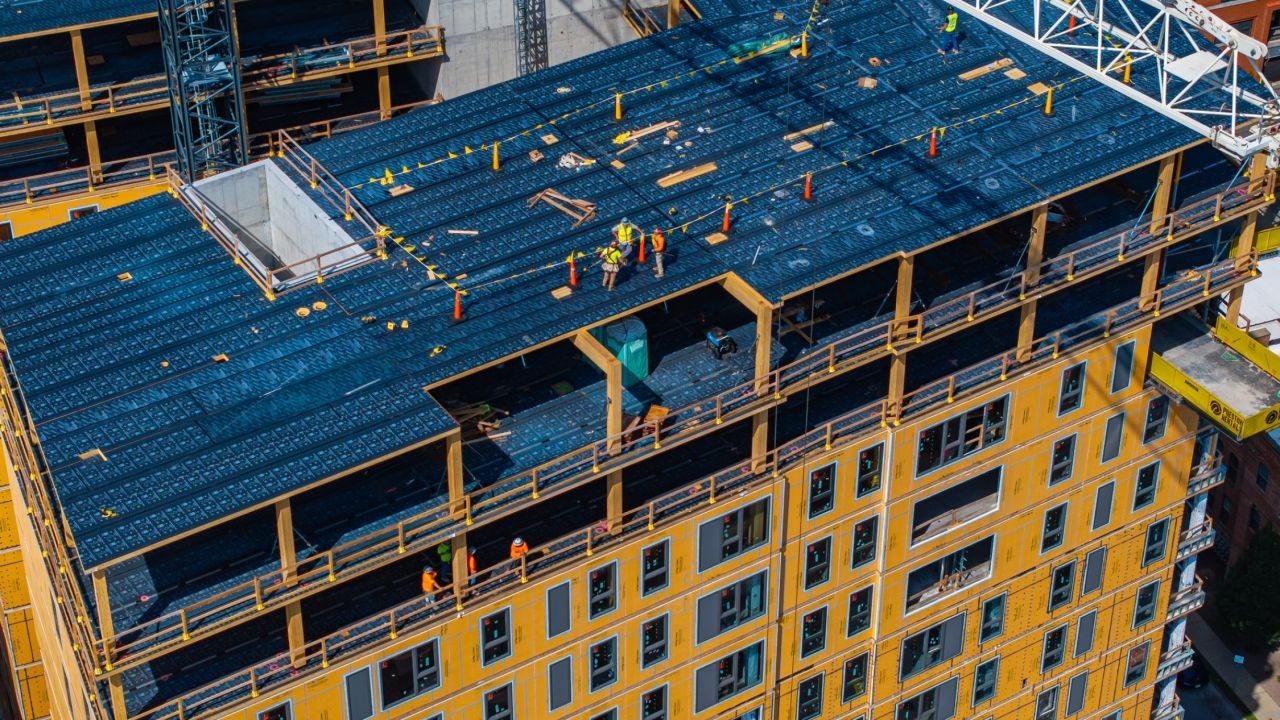
On 9th and High, the timber crew matched it: 12,000 square feet of mass timber in three-day cycles, with five or six people. Ironworkers set that building. INTRO Cleveland was set by carpenters, and the East Lansing project will be too. Different trades can do the work, and each has its own view of what works.
Speed becomes money through finance carrying costs, tower crane time, and the contractor's general conditions. FOREFRONT has built animations from productivity data on its own projects that stack a mass timber building beside a cast-in-place version, using regional rates. Where the project sits changes the pitch. In a slower concrete market, a developer can lead with timber as both a differentiator and a faster way to get in and up.
Tall timber still isn't all timber. These buildings use cast-in-place cores, so the concrete and timber crews have to work together.
What the Crews Changed on 9th and High

Several of the details that made 9th and High fast came from asking the people setting timber. "We should always be students," Dortzbach said.
Column joints. Many projects join columns with steel connections, either prefabricated or custom. Dortzbach watched laborers fuss with them in the field. On 9th and High, FOREFRONT switched to a wood-to-wood connection: a block-cut notch set with simple dowels. "There's a balance between a Swiss watch mentality and a get-er-done mentality," he said.
Panel joints. CLT panels are often joined with a recessed spline routed into each panel edge on a CNC machine. 9th and High uses Simpson Strong-Tie's LDSS straps instead. They sit on top of the panels, need no routing, and go down right over the waterproofed deck. That saves time at the plant and in the field. Dortzbach credits general contractor Elford Construction 's push to get the building watertight early, and SmartLam shipped the panels with a vapor barrier already on the deck.
Slab edge. A window wall needs room between the face of the column and the edge of the slab, typically a foot to two feet. Cantilevering CLT that far in its weak direction is hard, and the common fix is a haunch at each perimeter column, which adds another piece and another connection. FOREFRONT notched the column locally so the slab could sit on it, then developed a composite connector at the slab edge to push the spans further.
Crane time. On INTRO Cleveland, the team watched the tower crane do everything and saw how much time that cost. They set bundles of beams and columns on the deck and had one crew place them with a simple gantry crane, the kind most ironworkers have on site. That kept the tower crane on CLT panels.
TAKEAWAY: Before details are fixed, ask the crew that will set them what slows them down.
Off-the-Shelf Connectors and the Case for Commoditizing Mass Timber
INTRO Cleveland used custom-designed connectors throughout. That gave a local steel fabricator work it might not otherwise have had. It also caused problems during construction whenever a piece didn't fit up.
Since then, several manufacturers have brought out off-the-shelf concealed connectors that can be used in fire-rated assemblies of two or even three hours. FOREFRONT worked with Neutral on a three-hour loaded fire test of a mass timber assembly with standard connectors in 2025 with @Simpson Strong-Tie, a hardware supplier. The assembly performed well under full load. On 9th and High, the beam-to-column joints use standard Simpson connectors.
Connectors are part of a bigger argument. Walk through a large CLT or glulam plant and you'll see blanks come off the line quickly. The slowdown comes at CNC, where each piece gets cut for its connections. "For manufacturers to spit out just a pure blank with no finishing on it, that's like a dream for them," he said.
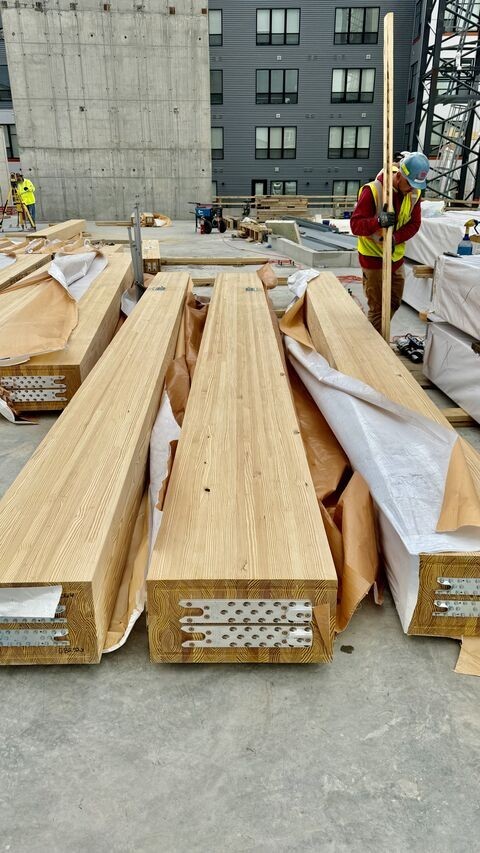
Dortzbach wants mass timber to work more like lumber already does. Builders buy 2x4s and sheet goods in standard sizes, and go to a lumberyard for higher grades. He'd like to see CLT blanks that could be bought and modified on site, and a menu of standard pieces that covers 70 to 80% of the market.
The pushback is that equipment lines, species, and design values vary too much across North America. Dortzbach doesn't buy it. "Whenever anybody says it's impossible, there's probably an ulterior motive behind that," he said. He doesn't expect it to happen overnight. But the industry already turned trees into commodity lumber. Turning commodity lumber into commodity panels and beams is the next step.
Standard parts don't mean standard buildings though. Dortzbach compares it to Lego or an IKEA kit: fixed pieces, unlimited combinations. Some volumetric modular buildings get criticized for looking like stacked boxes. A kit of commodity timber parts doesn't have to.
How to Get Cost Certainty Before Schematic Design
FOREFRONT builds its own software. The tools combine Rhino and Grasshopper with C#, Python, and custom code that reaches into the APIs of industry-standard programs. They let the team test options for any manufacturer and any layout quickly, and check them against the developer's pro forma.
Some developers now bring FOREFRONT in before they've hired an architect. The team tests structure and program against the pro forma first, then brings the architect in to do what architects do best. Recently, one FOREFRONT engineer designed an optimized 18-story building in a day, and it went out for pricing. Dortzbach calls that an extreme case. The client doesn't pay for a day of labor. It pays a premium, because the work cut out close to six months.
Programming is part of the early work. Clients and architects often ask for the most efficient grid. The answer depends on where the amenities go and what unit sizes work. Dortzbach aims for about 80% efficiency and leaves 20% for what makes the building distinct.
The software is only part of it. Dortzbach pairs a 40-year veteran with a two-year engineer who's fluent in digital tools, then puts both in front of a contractor who gets asked how to do it better. He tells his engineers to stay in coordination meetings after their part is done, because that's where they learn how the rest of the process works.
"We should never get to schematic design completion and not know that we can build this thing." - Josh Dortzbach
TAKEAWAY: Test the structure against the pro forma before schematic design is complete, with the supplier's constraints included. Pricing should confirm the budget, not reset it.
What's Next: Cold-Formed Bearing Walls and CLT
The system Dortzbach is most excited about combines panelized cold-formed steel bearing walls with CLT floors. The target is student housing, multifamily, and hotels at roughly 15 stories and under. He doesn't think timber can beat five-over-one wood framing on cost. He thinks it can take much of what has been built above that height in cold-formed steel or cast-in-place concrete.
FOREFRONT is using it on a 10-over-3 project in East Lansing, Michigan: cold-formed bearing walls, CLT slabs, and punched windows and window wall following quickly behind the frame. The hard part is shortening. Stack CLT on cold-formed walls platform-style at that height, and the top of the building could move down as much as an inch and a half to two inches. At five stories that's manageable. At eight to 12, it isn't. FOREFRONT has developed connector nodes between the floors to solve it.
He puts the opportunity at about 10 billion square feet of load-bearing wall construction over the next decade.
None of what he describes is fixed. "Whatever tools or tips or tricks we're doing right now, it's going to be different in six months," he said.
If you're exploring mass timber for your own projects, your going to need the team, knowledge and connections to make it successful.
Frequently Asked Questions
- Is mass timber more expensive than concrete? Often on material and construction cost, according to published cost studies, but results vary widely by project and region. Comparisons that account for schedule, crane time, finance carrying costs, and finishes such as exposed ceilings can narrow or close the gap. FOREFRONT Structural Engineers compares whole building systems rather than structural frames alone.
- How fast can a mass timber floor be installed? On 9th and High in Columbus, Ohio, a crew of five or six set 12,000 square feet of mass timber in three-day cycles, according to FOREFRONT. That matches post-tensioned concrete cycles in Chicago, one of the fastest concrete markets in the country.
- Can mass timber ceilings be left exposed in tall buildings? Under the 2024 International Building Code, Type IV-B construction, allowed up to 12 stories, permits up to 100% of mass timber ceilings to be exposed within a dwelling unit or fire area. The 2021 code allowed 20%. Adoption varies by state and city.
- What are off-the-shelf mass timber connectors? They are manufactured, tested connectors, such as concealed beam hangers, used in place of custom-fabricated steel. Several carry two-hour fire ratings, and a three-hour loaded fire test of a mass timber assembly using standard connectors was completed in 2025.
- When should a project team price mass timber? Before schematic design is complete. FOREFRONT tests structural options against the developer's pro forma early, sometimes before an architect is hired, so the first full pricing confirms the budget instead of triggering a redesign.
- Who installs mass timber, carpenters or ironworkers? Both. On FOREFRONT's projects, ironworkers set 9th and High in Columbus, while carpenters set INTRO Cleveland and will set the firm's upcoming project in East Lansing, Michigan.
.png)
Building a CLT Plant: Why Starting Small Can Beat Starting Big with Ledinek's Jaka Bradac
How mass timber gets made, what plant size changes, and what Ledinek's Jaka Bradač has learned selling CLT and glulam lines on both sides of the Atlantic.
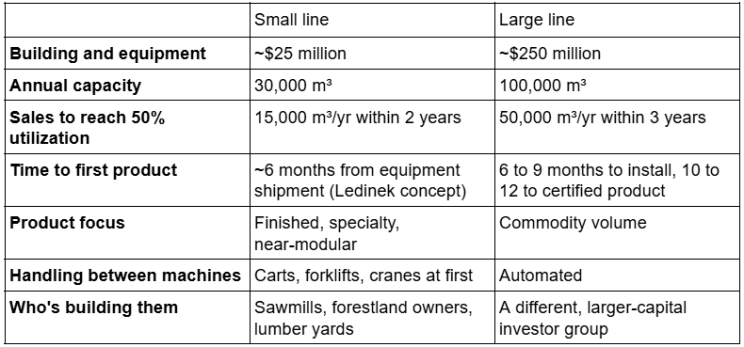
Picture two CLT plants in the same town, chasing the same customers. One cost $25 million. The other cost $250 million. At the start, they'd win the same share of the market. One of them has to sell more than three times as much to stay on track.
That's the case Jaka Bradac makes for starting small. He's Sales Executive for North America at Ledinek Engineering, a Slovenian company that has designed and built more than 35 CLT and glulam lines. Most North American plants were built big, sized for demand expected three to five years out. Bradač argues the next wave should look different, and his reasons come down to four things: how much you have to sell, how fast you get to product, how you grow, and how much control you have over your wood.
Here's how the two compare.
This article is just one part of the newsletter where we cover who and what’s shaping the mass timber industry.
👉 Stay ahead of the mass timber industry & grow your network. Join Our Newsletter
How is CLT made? From log to finished panel
Every CLT plant, large or small, turns boards into panels the same way. Cross-laminated timber (CLT) is a structural panel made by gluing layers of lumber at right angles to each other. Glulam is a beam or column with every lamination running the same direction. Both follow the same path.
Example of a CLT production line. Credit: Ledinek
Where the lumber comes from
A sawmill cuts the log to a pattern set by a scanner and optimizer, sorts the wet boards, and kiln-dries them, typically to about 12% moisture content. (ANSI/APA PRG 320-2025, the North American CLT standard, caps it at 16%.) The boards are planed and graded visually, by X-ray, or by machine stress rating (MSR), which bends each board to measure stiffness.
Inside the plant
A graded board still carries knots, cracks, and splits. The plant regrades it and cuts out the defects. The clear pieces are finger jointed into long laminations. That joint is watched closely: glue application, joint pressure, and friction through the press are all monitored, and joints get daily tension tests. Then the laminations are planed, the surfaces prepared, and glue applied, with ambient conditions recorded. The press applies a specified load for a specified time. A finishing step completes the panel.
Bradač calls the finger jointer, the planer, and the press machine centers. They're the expensive part of a line, and they set its capacity. Everything that moves wood between them is handling: automated conveyors in a big plant, carts and forklifts in a small one. Handling is where a small line can save the most up front, and where it finds capacity later.
TAKEAWAY: Large or small, every CLT plant runs the same steps: regrade, cut out defects, finger joint, plane, glue, press, finish. Scale changes how those steps are automated and connected. It doesn't change what they are.

How do European and North American CLT plants differ in size and wood supply?
In Europe, CLT grew out of glulam. The first producers were attached to sawmills, and some were tied all the way back to logging. The boards that reached their lines came from their own mills, not the open market. Those plants started small and grew over time. That control shows up in the product: a typical European CLT layup mixes a wide range of layer thicknesses and grades, because the producer decides which boards go where.
North American plants mostly skipped that path. They were built at large scale “from zero,” and all but a few buy their lumber on the open market, usually as graded, kiln-dried dimensional lumber.
How does plant size change a CLT plant's risk?
Capital comes with a production target. The bigger the investment, the more the plant has to produce and sell to cover it, and the sooner it has to get there.
But plant size doesn't change demand. Go back to the two plants in the same town. At the start, they win the same customers and the same orders. What changes is how much of each line those orders fill.
The small plant needs to sell half its 30,000 cubic meters, or 15,000 a year, within its first two years. The large plant needs to sell half of 100,000, or 50,000 a year, within three. If both win the same orders, the small plant is on track. The large plant is running at a fraction of its capacity. The small one, as Bradač puts it, doesn't have to stress as much.
That pressure decides what each plant can make. A large plant only makes money with its press full, so it has to chase commodity volume. Specialty projects don't fill an operation that size. A small plant can take that work, and specialty is where the margin is.
The volume target also takes a long time to reach. In Europe, the companies running 100,000 cubic meters a year got there after 20 years of winning business.
TAKEAWAY: A large plant carries more risk because it has to sell more, sooner, into the same market. A small plant can hit its target on fewer orders, and that leaves room for higher-margin specialty work.
What should a small CLT line make?
A small line wins on product, not volume.
One of the smallest lines Ledinek has built, in Europe, has a press that makes panels up to 45 feet long and runs four to five cycles a day. The plant doesn't sell bare panels. It goes a couple steps further to serve the housing market: insulation and cladding installed at the plant, ready to go. It's a niche, value-added product. It doesn't need to compete with the large manufacturers for big projects.
Bradač sees the same model fitting North America: a more complete, modular or prefab product that simplifies the purchase and grows the market.
But that model doesn't lock a small line out of larger work either. A $25 million plant can still run eight CLT press loads a day. It needs longer delivery times on a big job, but it can deliver. And size alone doesn't guarantee throughput. Unless a plant's downstream formatting line is fully automated across several machine centers, it runs into bottlenecks anyway.
How fast can a CLT plant get product out the door?
A 100,000 cubic meter line takes six to nine months to install and 10 to 12 months to reach first certified product, roughly. Every situation is unique.
Ledinek's 30,000 cubic meter concept is built to move faster. Product comes about three months after installation starts. Then comes roughly a month of commissioning to dial in reliable bonds, and three to four weeks for APA certification. That's about six months from the day equipment ships from Europe to product on the U.S. market.
How does a small CLT line add capacity?
Start with the machine centers. Move wood between them by cart, forklift, or overhead crane. Automate the links later, when the orders justify it.
Full automation between machine centers is what drives a line's price up. Plenty of North American plants still run on hand work, and a new pilot plant can do the same.
Growth then comes in two steps. The first is utilization. Machine centers are built with growth in mind, so they are rarely the limit. Handling is. Wood doesn't reach the machine because the forklift driver is on a coffee break and half an hour is gone. Or it can't leave because something backed up downstream. Tightening that up adds roughly 20 to 25% capacity from equipment you already own. The second step, if you need to double output, is ordering another line.
“It's not the machine centers. It's mostly the handling around the machine centers.” - Jaka Bradač, Ledinek
No two lines come out the same. Each is customized to the owner, which is why machine selection matters at the start. It sets how much headroom you have to grow into.
What this means if you're considering a CLT plant
- Size the line to the orders you can win, not the market you expect.
- Spend first on machine centers. Move wood manually until volume pays for automation.
- Make a product your line can add to: finished, specialty, higher margin.
- Get close to the wood. Own a mill, partner with one, or build next to one.
- Choose machines with growth potential in mind. Your first 20 to 25% of growth comes from handling, not new equipment
If you're exploring mass timber for your own projects, your going to need the team, knowledge and connections to make it successful.
Frequently asked questions about CLT plants
- How is CLT made? Kiln-dried, graded lumber is regraded at the plant and trimmed of defects such as large knots and cracks. The clear pieces are finger jointed into long laminations, planed, and glued. Layers are laid at right angles to each other and pressed under a specified load and time, then finished.
- How much does a CLT plant cost? It depends on capacity and automation. Ledinek’s Jaka Bradač contrasts roughly $25 million for a small plant with $250 million for a large one as an illustration. Published European projects include about €30 million for a 100,000 m³ plant (2017) and €130 million for 140,000 m³ including sorting and planing.
- How long does it take to build a CLT plant? According to Bradač, a 100,000 m³ line takes six to nine months to install and 10 to 12 months to reach first certified product. Ledinek’s 30,000 m³ concept is designed to produce certified product for the U.S. market about six months after equipment ships from Europe.
- What is the difference between CLT and glulam? CLT is a panel made from layers of lumber glued at right angles, used for floors, roofs, and walls. Glulam is a beam or column made from laminations glued with the grain running the same direction. Both are mass timber products and share much of the same production process.
- Can CLT be made from hardwood? Yes. Yellow poplar was added to ANSI/APA PRG 320, the North American CLT standard, in its 2025 edition. University testing found yellow poplar CLT comparable in strength and stiffness to Southern pine CLT. Hardwood lumber is still appearance graded rather than machine stress rated, which remains a gap for glulam.
- What wood species are used for CLT in North America? PRG 320-2025 covers softwood groups including Spruce-Pine-Fir, Douglas Fir-Larch, Hem-Fir, Southern pine, and others, plus yellow poplar.
.png)
New Glulam Species, 3D-Curves & Impossible Projects with Art Massif
Somewhere between the era of steamboats and the world wide web, the industry lost the muscle memory to build with heavy timber. We were putting up NLT and glulam buildings before 1950. But then, everything switched to steel and concrete, and the expertise walked out the door with it. So when an architect brings an ambitious timber concept to the table, too often they hear “Not feasible. Too expensive. Switch that part to steel. Nobody can build it.”
Dave Savard and Geneviève Constancis, ing.f./for.eng. of Art Massif | Wood Structure spend their days proving those answers wrong. In this piece, Dave and Geneviève walk through Aspen Pure, their new structural glulam made from quaking aspen, the free-form theater canopy they just delivered for Hudson Valley Shakespeare, and why so many timber designs get talked down before anyone checks what's actually possible.
This article is just one part of the newsletter where we cover who and what’s shaping the mass timber industry.
👉 Stay ahead of the mass timber industry & grow your network. Join Our Newsletter

A Structural Product From a Tree Nobody Wanted - Aspen Pure
"It really started from the forest," Geneviève says.
One of Art Massif's four partners, the company's production director, was harvesting quaking aspen on his own land and couldn't get past how white the wood was. It was just too beautiful to waste on the usual fate. Because that's what quaking aspen has been, one of the least valued trees in North America. It goes to pulp for paper. It goes to shipping pallets. Almost no value-added products, and almost no economic return for the communities that harvest it.
So they started testing it. With the right moisture content, the right drying, and the right sanding, it now has a home in the structural glulam market.

What came out is a different architectural language for glulam. Lighter, brighter, more uniform, with fewer knots and less character than Douglas Fir, southern yellow pine, or spruce. Nothing wrong with the traditional species in the right setting. But Aspen Pure gives architects and designers a modern look they've been asking for and couldn't get.
The performance is there too. From Art Massif's testing, the design values are equivalent or superior to spruce. Part of that comes from selection: they sort and grade the fiber themselves with their own equipment, so only the best material makes it into the structural product. Right now Aspen Pure runs as the equivalent of a 20f-EX layup, and they believe a more detailed process could push the values higher.
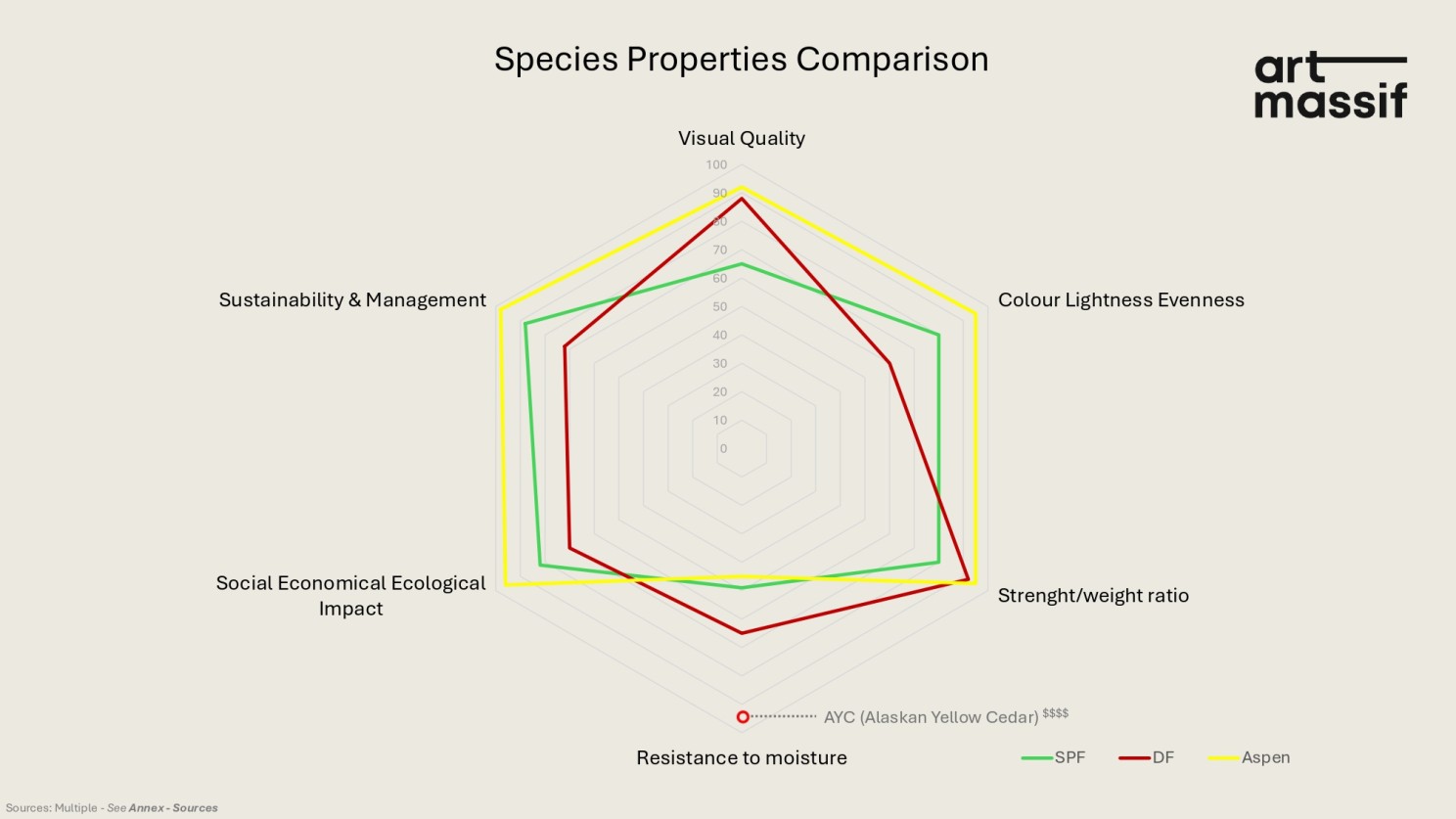
None of it was plug and play. Every species has its own character. Aspen can't be graded the way other species are graded, and it can't be kiln dried the same way either, so Art Massif developed its own drying methods to protect the fiber properties. Sourcing had to be built from scratch too, because structural-grade aspen supply didn't exist in the market.
They launched Aspen Pure in Spring 2026, and the reception from architects and designers has been strong.
But, you might have seen something else in the mass timber world challenging assumptions on what’s possible. And Art Massif played a role there too.
The Theater That Had to Grow From Its Site

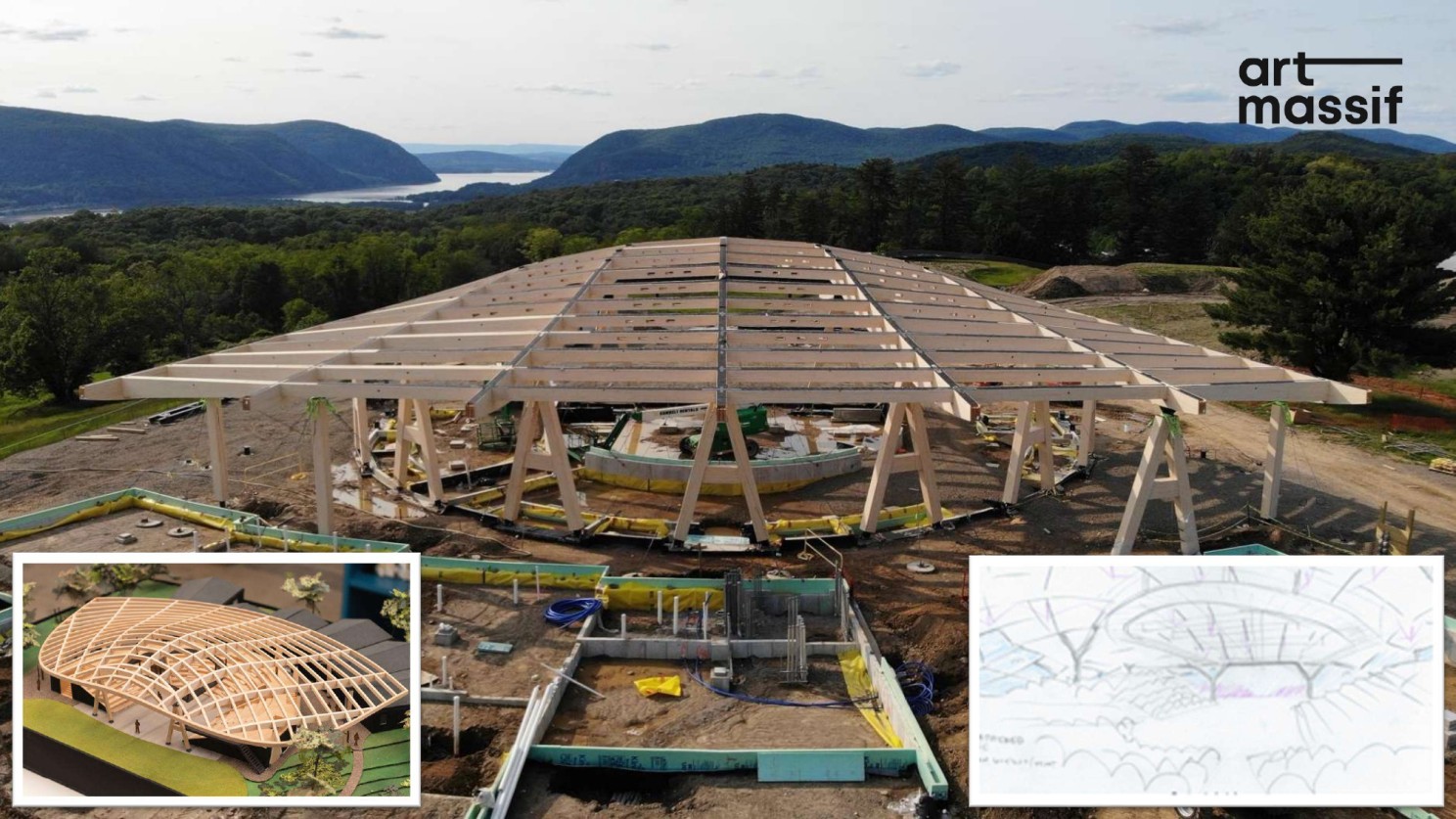
Hudson Valley Shakespeare's new permanent home, the Samuel H. Scripps Theater Center, opened with a ribbon cutting this spring.
The site sits in the middle of a valley with a mountain behind it, and the architect's intent was a building that belongs to that scenery, almost like it had grown from the site itself. That meant curves in every axis and every angle. It also meant a nonprofit client with a real budget ceiling and zero appetite for compromising the design.
The path between those two things was a comprehensive design assist phase. Months of it, with the architect, the engineer of record, the construction manager, and Art Massif's team working through hundreds of small challenges to make the structure constructible. Dave's description of the team: “no egos, nobody fighting for a bigger piece of the pie, everybody solving problems.”
Three moves from that phase stand out.
Straighten what nobody will notice.
The most important members stayed fully curved in both axes. But some elements, like certain purlins, could be straightened without changing the overall look. You can't spot it in the finished structure. Curves cost time and money, so they saved them for where the design needed them. That kept the project on budget and on schedule.
Borrow strength from what's already there.
A theater needs a steel catwalk regardless. The team put it to work as a compression ring, pulling load off the wood structure. Smaller connections, smaller members, lower overall cost, from a piece of steel the building was getting anyway.
Prove it out.
The original design had the roof in another material, because the team had doubts the timber decking couldn't follow a roof curved in all angles. Art Massif was convinced it could. So they built a full-size mock-up in their shop. Nobody asked for it, and nobody was paying for it. But the mock-up proved it was possible, and it showed the team how committed Art Massif was to the timber succeeding.
"This is where our dream thrives," Dave says of that phase. It's where their engineers and project managers find their value, working shoulder to shoulder with the architect and EOR until the ambitious version of the building is the buildable version.

Every one of those solutions existed because someone kept asking what was possible. Geneviève's concern is how rarely that happens.
Why Architects Stopped Asking
Art Massif has a phrase they repeat to designers: architects are allowed to ask for what they want.
That phrase shouldn't need to exist. Of course an architect asks for what they want. Except in mass timber, they often don't, and Geneviève traces it back to that lost expertise. Wood is an old structural material with a young workforce. When construction switched to steel and concrete, the knowledge of how to design and engineer with timber faded across every stakeholder group. Few schools in North America teach it. Architects are excited about the material, but if the engineers, builders, and reviewers around them aren't educated on it, the whole thing feels risky.
And risk gets answered with myths. It's not feasible. Change that part to steel, wood will be too expensive. Nobody can manufacture it. The design shrinks a little at every meeting until the ambition is gone.
Geneviève's answer is simple. Ask for it, and ask the right person for it. The manufacturers doing this work at a high level exist, and the capabilities go further than most of the industry realizes.
Asking is half the equation. The other half is a partner built to say yes.
Built to Say Yes
There's no machine you can buy off a shelf that makes 3D curved glulam. That's the first thing to understand about how Art Massif works. Their production team runs on the same everything's-possible mindset as the front office, so when a project calls for something no equipment exists for, they adjust their machines or build new ones.
How a 3D Curve Gets Made
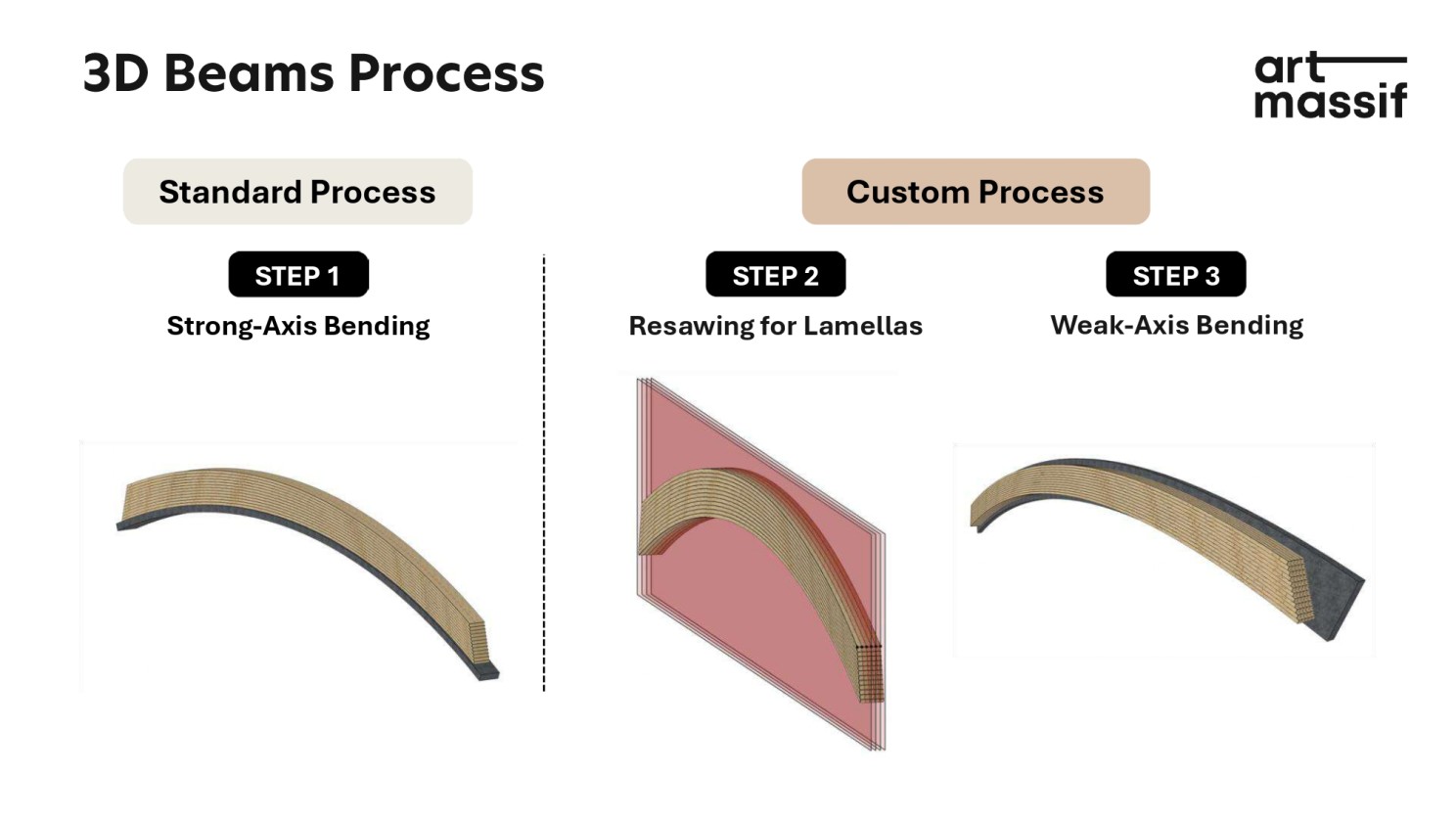
For a tight-radius member curved in both axes, it's a three-step process. First the member gets curved in one axis in the standard press. Then it's resawn into lamellas. Then those get curved in the second axis on a custom press Art Massif built specifically for 3D work. It takes real time and energy, and as Dave puts it, "it's not a cheap cubic meter." Which is exactly why they simplify shapes anywhere it won't change the design intent.
The equipment is one piece of a bigger structure: Art Massif can own nearly everything on a project when the project requires it. Design build or design assist from a blank page, backed by a large in-house engineering team. CNC fabrication on a high-end Swiss machine they acquired in 2021, precise enough that complex members in all angles fit perfectly on site. Finishing, fabrication, and installation with their own crews. And something rare in the industry: connection design and steel fabrication in-house.
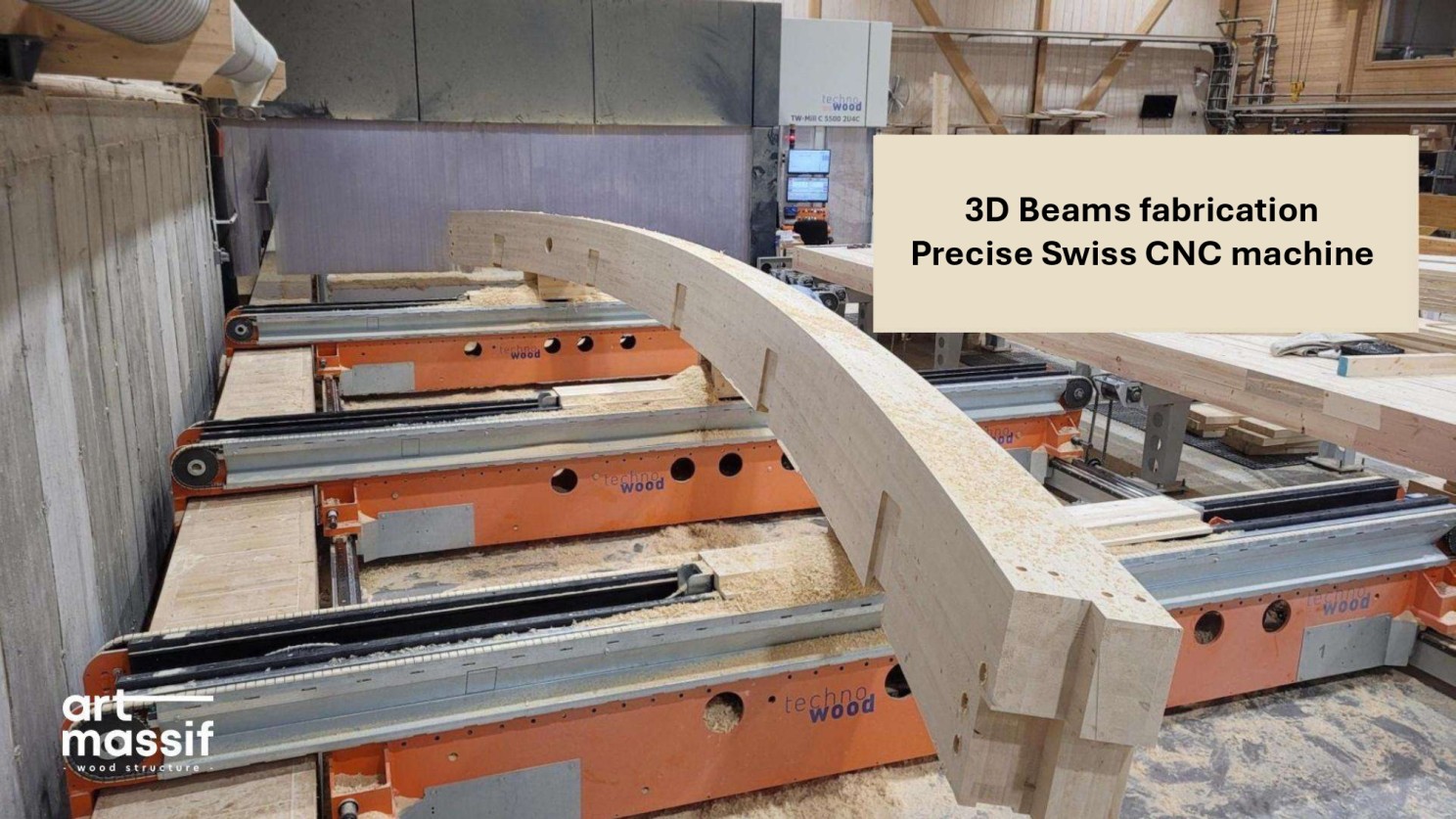
The reason is de-risking. Every additional interface on a complex project is another chance for miscommunication, delays, or budget problems. Art Massif partners with others the majority of the time, and gladly. But where the right expertise didn't exist externally, they built it internally. For the client, that means one conversation and one accountability structure.
Where does all that capability aim? Geneviève's shorthand is quality or complexity. The 100,000 square foot, ten-story square box with huge volume is not their type of project. Theirs is the 15,000 square foot luxury home, the 30,000 to 40,000 square foot museum or arts center, the condo amenity space. Right now they're in construction on the 12th story of a condominium building, a penthouse level with a gym, pool, and spa in high-quality glulam.
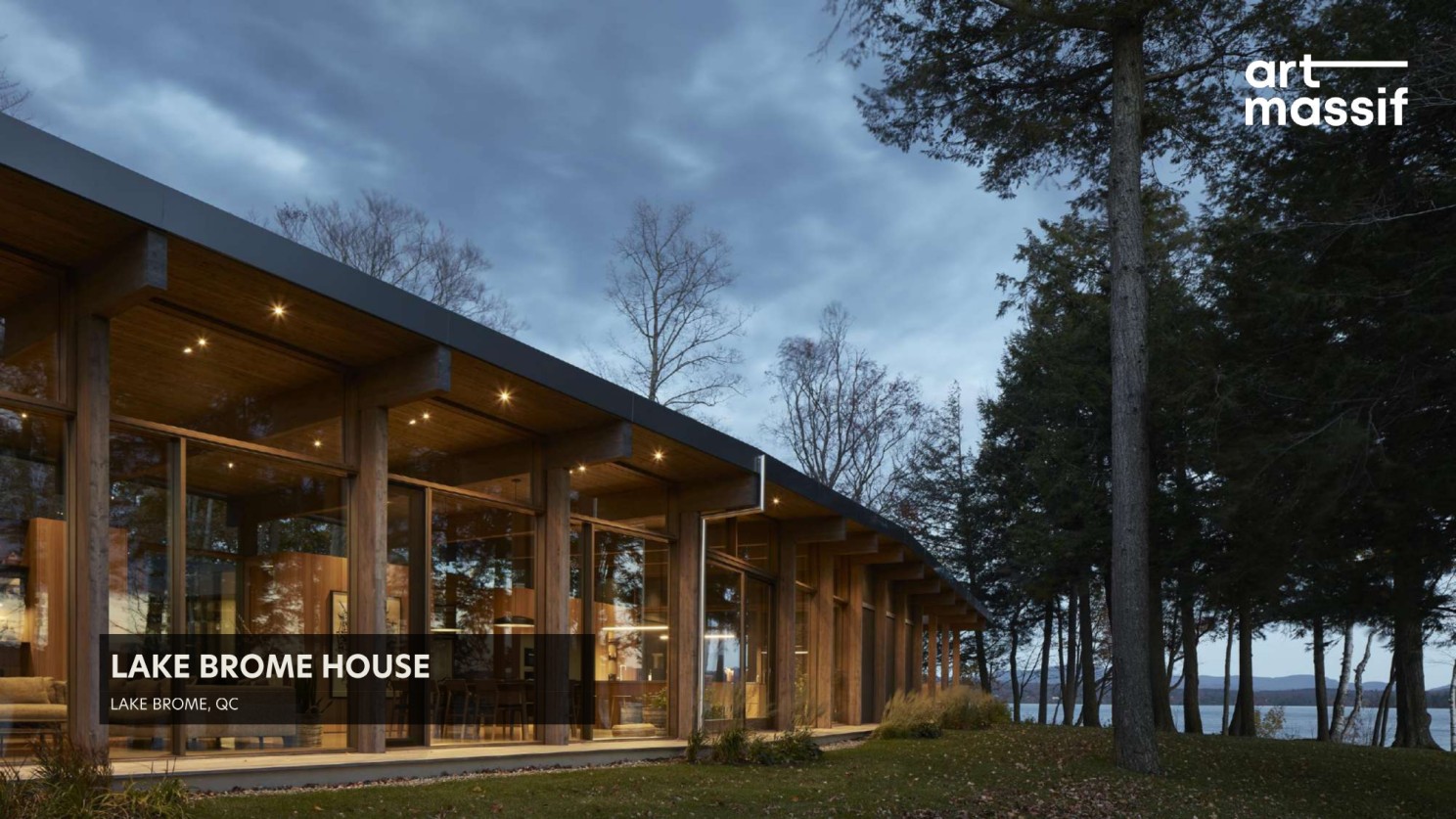
All of it circles back to the advice they'd give any architect starting a first timber project.
Talk to Someone Who Knows
Geneviève's day-one checklist is short. Think about your grid. Think about efficient radii and repetition. But her bigger point sits above all of that: talk with someone who has real experience before you lock in your design. Timber is a different material from steel and concrete, and it changes how you take the very first step. Maybe in 20 years every school will teach it and this conversation won't be necessary. Right now, the shortcut is borrowed expertise.
Dave's version: involve your producer. Art Massif keeps a full pre-construction team ready to pick up the phone at any stage of a project, and they'd rather invest time educating a design team early than watch anyone rework plans mid-project against a budget and schedule.
And when the doubts start arriving in meetings, remember the phrase. Architects are allowed to ask for what they want.
If you're exploring mass timber for your own projects, your going to need the team, knowledge and connections to make it successful.
Stop Waiting for Better Building Products w/ Zenon Radewych of WZMH Architects
The building industry has a strange relationship with its own materials. Most of the people designing, engineering, and building things treat the products and materials as a fixed list of options. If the available products don't quite do what the project needs, the project bends to fit the products.
But not all. Some people have stopped accepting that. Instead, they’ve leaned into the “what if we had this…” or “what if we made that?” They've built the inventor’s mindset into their companies, literally and figuratively.
Zenon Radewych is one of them. He's a principal at WZMH Architects, a 65-year-old firm based in Toronto, and the person behind @sparkbird, their R&D lab where they don’t let what’s currently available limit their options. And now, they’re looking at mass timber.
This article is just one part of the newsletter where we cover who and what’s shaping the mass timber industry.
👉 Stay ahead of the mass timber industry & grow your network. Join Our Newsletter
A Lab Isn't a Department. It's a Permission Slip.
When most people in this industry hear “R&D lab,” they picture a big space with a big budget. A formal program. A roadmap. Milestones. Maybe a Ph.D. or two.
sparkbird isn't that. It's a corner of the WZMH office where people work on things that interest them, often without a deadline, often without a guarantee that anything will come of it. Ideas come from client meetings, from frustration with how a project went, from a side problem that showed up while solving something else. Some of those ideas take a month. Some take ten years. Some get shelved. Some get handed off to industry partners who can actually take them to market.
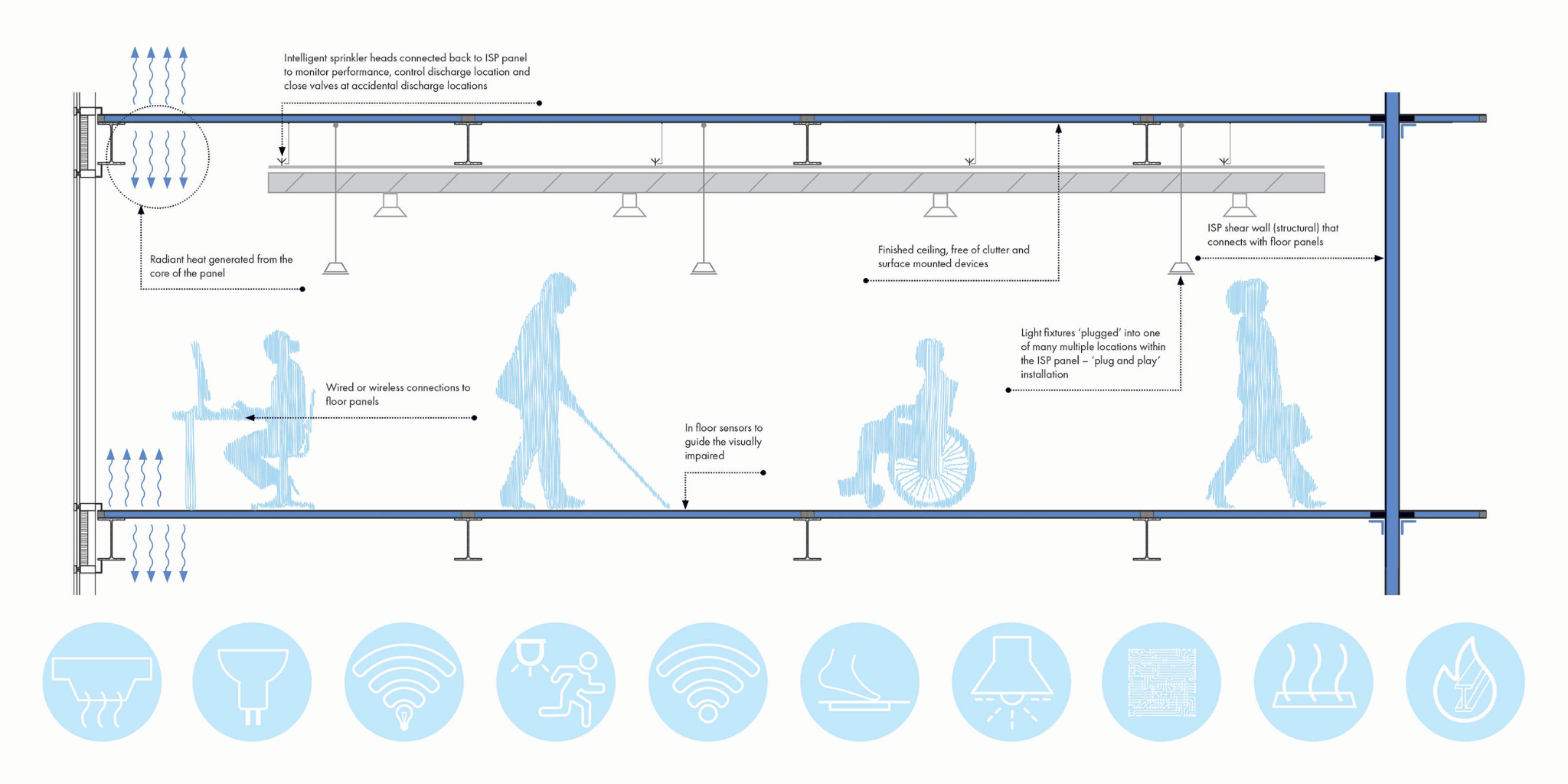
sparkbird's first invention, the Intelligent Structural Panel, started in 2017. It takes all the components and processes that go into constructing a floor and shear wall in a building and combines it into one product, including the mechanical, electrical, and IT. Microsoft saw an early mockup, invited WZMH into their IoT (Internet of Things) and AI Insiders Lab, and accepted them as the only architectural firm in the program.
When it comes to mass timber, four projects are live in the lab right now (and probably more by the time this article comes out - they move fast).
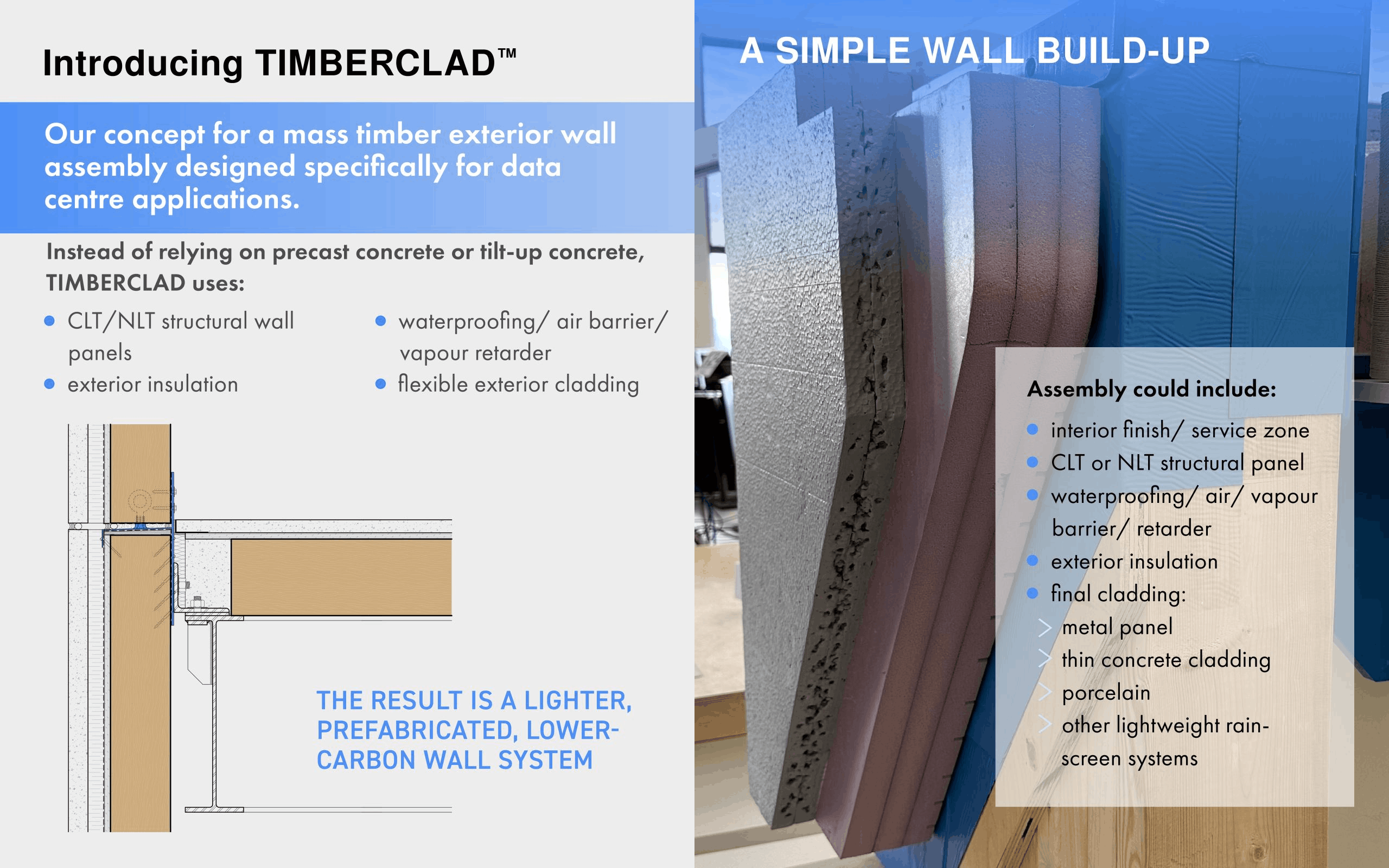
TIMBERCLAD™ is a mass timber exterior wall system aimed at data center construction. CLT or NLT panels paired with exterior insulation, air and water barriers, and flexible cladding options, designed to replace precast or tilt-up concrete walls. Lighter, prefabricated, lower-carbon. WZMH has a full-scale mockup of it in their office and is testing whether GripMetal between timber layers can improve composite action and stiffness under wind loading.
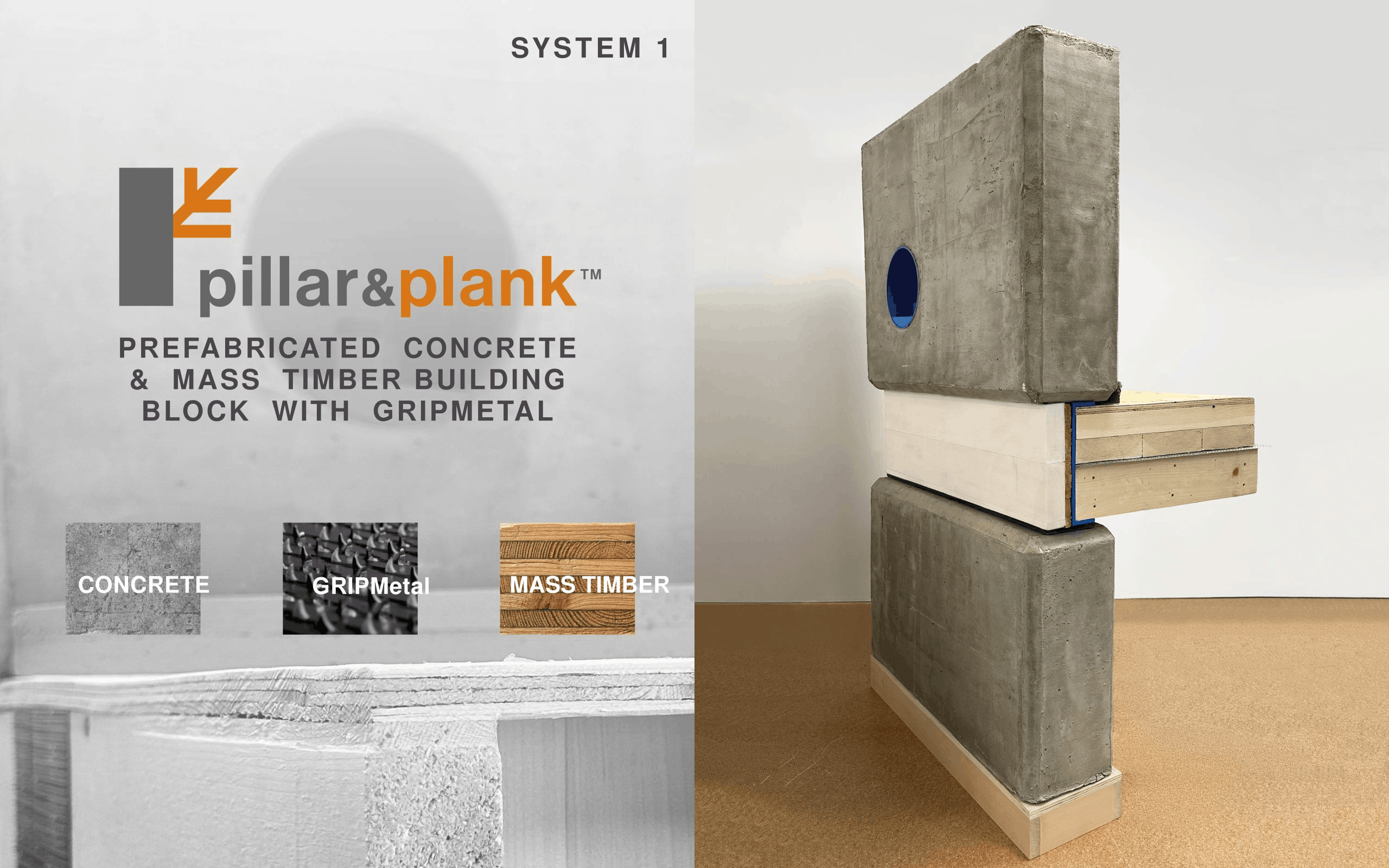
Pillar & Plank is a hybrid system aimed at multi-family residential, where clients want mass timber but are getting hit by cost and lead time. The structure combines precast concrete piers with mass timber floor panels, with or without GRIPMetal reinforcement. Precast plants exist across Canada, which helps with supply chain and price certainty. The pitch is the same as most good hybrid systems: use each material where it makes the most sense, rather than forcing one material to carry the whole building.
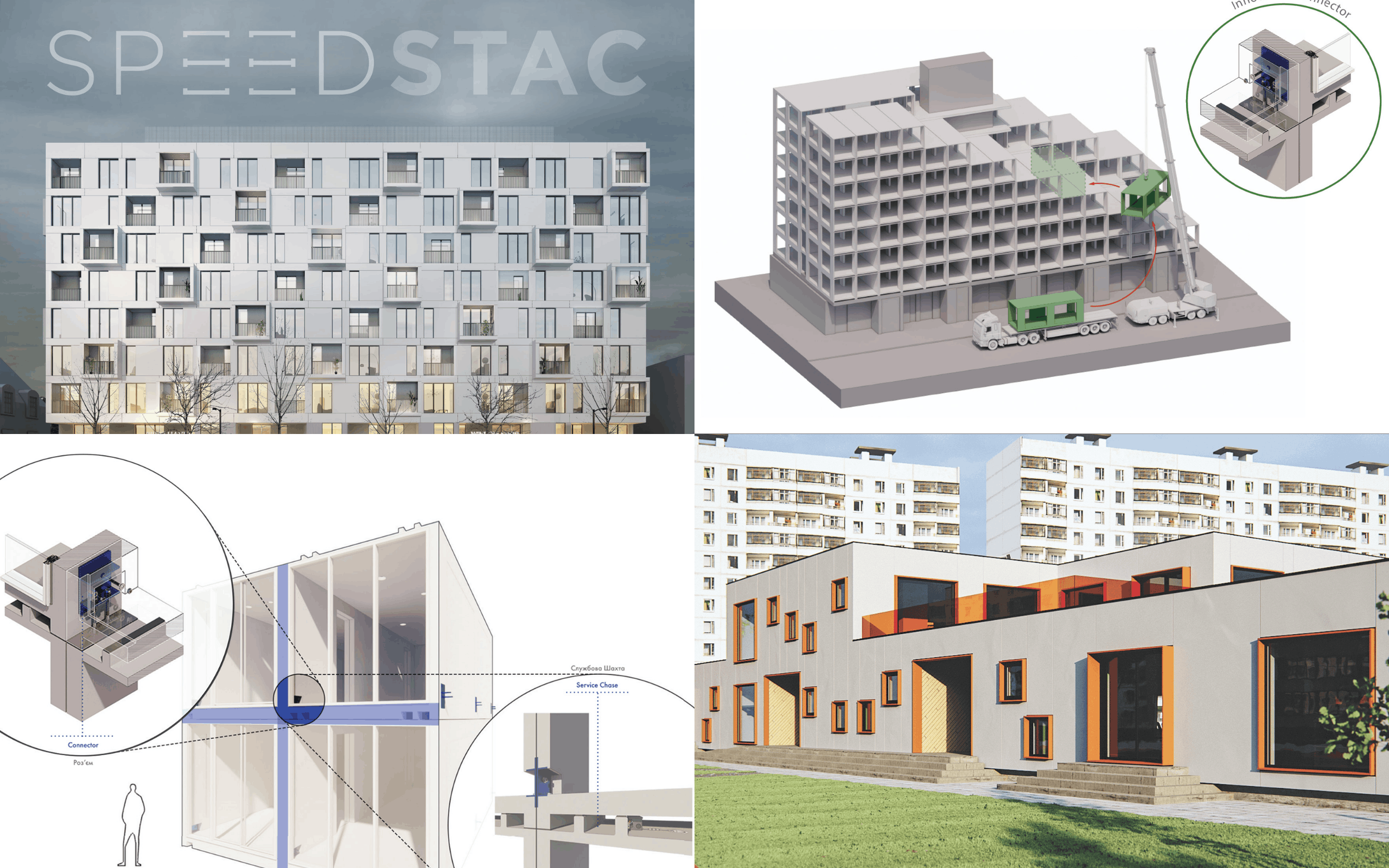
Speedstac is a modular building block system with built-in electrical and plumbing, designed to slide into damaged buildings by crane and replace destroyed sections without demolishing the whole structure. It started as a North American housing solution and pivoted to Ukraine after the 2022 invasion. The dimensions of Soviet-era apartment blocks turned out to match Speedstac modules almost exactly. WZMH won the Architect's Award at the 2023 Rebuild Ukraine competition, sponsored alongside Autodesk and Kingspan, designing 200 residential units for Kharkiv's north Saltivka district. A Speedstac kindergarten concept goes up in 10 working days. The system has both concrete and mass timber versions.
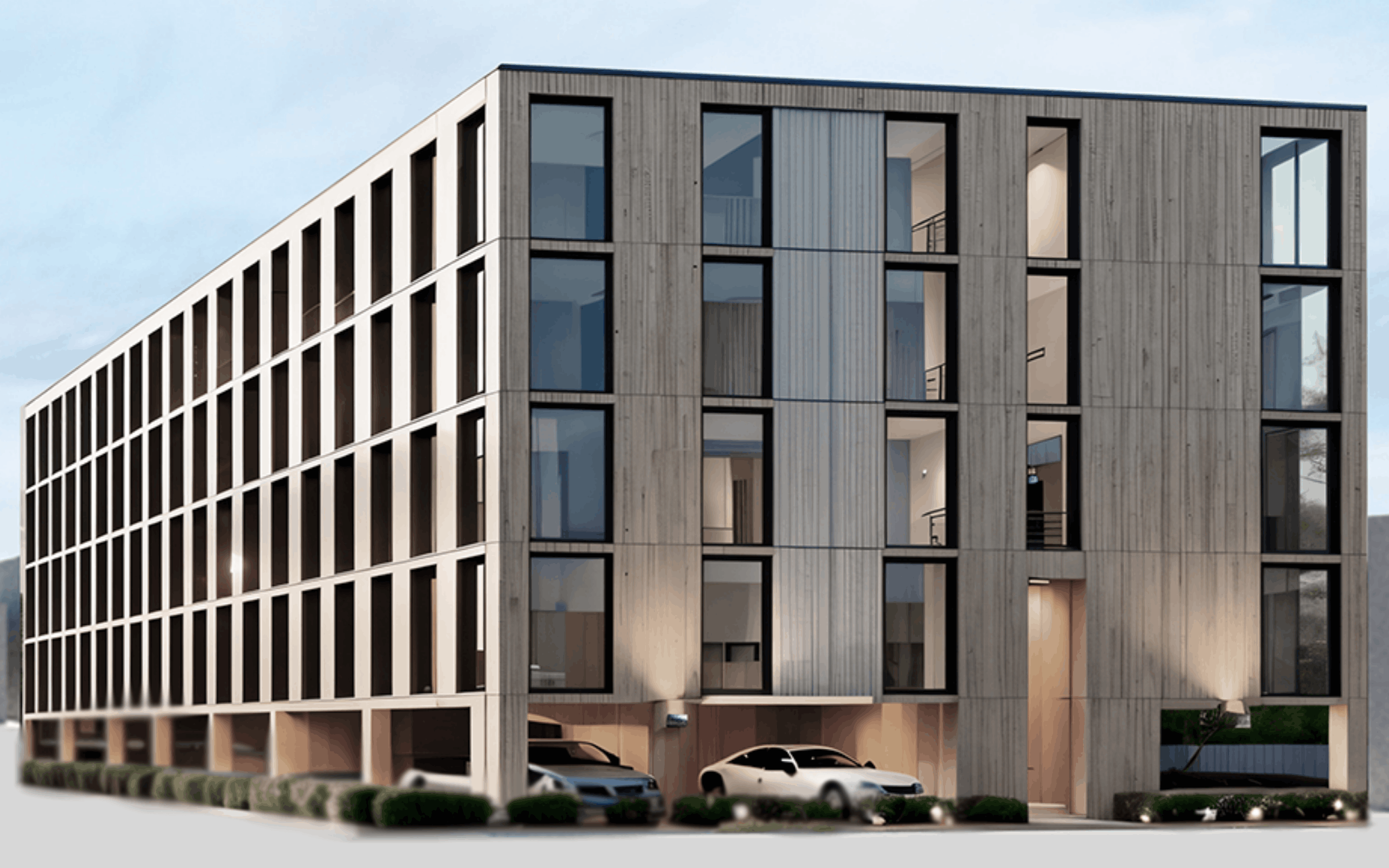
ELEVATE is the housing model. Build rental apartments on stilts over under-used community sites, decentralize the mechanical room into in-suite utility closets, and structure the deal so the host institution gets a revenue stream instead of selling land.
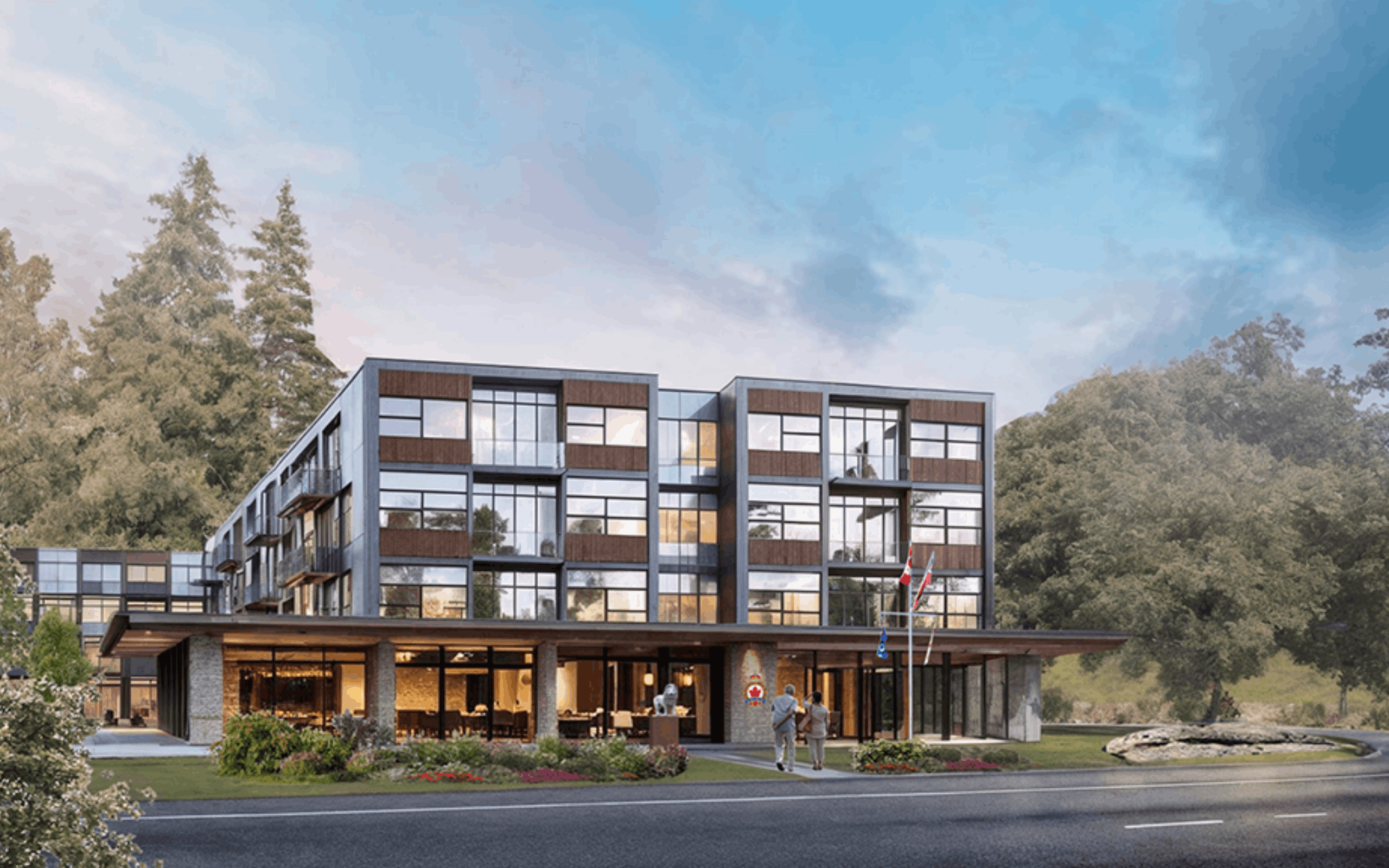
The first live project is in Bala, Ontario, where WZMH is replacing a 1970s Royal Canadian Legion hall with a larger legion facility on the ground floor and apartments above. The legion's signature semi-circle red brick bar will be dismantled and reinstalled in the new building. Demolition is targeted for May 2026. The same platform has been proposed for Toronto library sites.
None of those came from a strategic plan. They came from a team that was given permission to follow what looked interesting. The output is what happens when you keep that permission slip valid for a few years.
If a lab is just a permission slip, the question becomes: what does giving that permission actually do for the firm?
What Running a Lab Actually Does for the Firm
The easy answer is that the lab produces ideas, and some of those ideas turn into products. That's true, but it's the smallest part of what sparkbird has done for WZMH.
The bigger benefits show up in the day-to-day business.
The first is talent. People want to work somewhere that's doing exciting things. In a market where every firm is fighting for the same hires, it’s a real recruiting advantage. New staff gravitate towards the opportunity to invent and explore alongside their more traditional architectural work.
The second is competitive positioning. When WZMH competes for a project against other firms, they’re all showing up with similar portfolios, similar past projects, and similar people. Nobody's resume is really winning the interview. Zenon says sparkbird is what differentiates them.
“We could spend business development dollars on taking clients golfing and for dinners. Or we could spend that money in the lab here. Honestly, the results we're getting for spending the money in the lab are way better.”
The lab is the signal that the firm thinks differently, which is what clients hire firms for in the first place. The lab doesn't even have to be working on the client's specific project. The fact that the firm is the kind of firm that runs one says enough.
The third benefit is the longest to materialize and the hardest to measure. It's a different way of thinking. Teams that have spent time prototyping in the lab bring a different mindset back to their day-to-day work. They're more willing to question why something gets detailed a certain way, more comfortable proposing an unfamiliar assembly, more curious about what's actually possible.
The bet isn't on any single product. The bet is on what the lab does for the firm over time. Talent, positioning, mindset, and occasionally a real product that changes how something gets built.
If a lab does all that for one firm, the obvious question is what the industry would look like if a lot more firms ran one.
What If More Firms Did This?
Construction is one of the only major industries that hasn't fundamentally changed in a hundred years. Manufacturing has. Healthcare has. Aerospace has. The list of industries that have made big productivity leaps in the last fifty years is long. Construction isn’t on it.
There's no shortage of explanation for that. Fragmented supply chains, slow code cycles, project-based risk, conservative clients, thin margins. All real. But there's also an explanation that doesn't get said out loud often enough: most of the people designing buildings don't see inventing the parts - as part of their job.
Manufacturers are running businesses that depend on selling things they've already figured out how to make. The economic incentive for radical change sits with whoever is willing to spend time and money on something that might not work. And historically, that's been a small number of researchers in universities, an even smaller number of firms with their own labs, or the occasional tinkerer trying to make something better.
If a hundred more firms ran labs, even modest ones, that changes. Hundreds more people experimenting with hybrid assemblies, alternative materials, new connections, smarter mechanical layouts. Most of those experiments wouldn't go anywhere. But a few would.
A network of firms running labs, sharing what works, handing things off to producers who can ship them, moves things a lot. Mass timber in particular is the kind of category that would benefit from this. The product set is still relatively small. The supply chain is still developing. The cost curve is still figuring itself out. Every additional firm pushing on what mass timber can do, structurally and economically, accelerates how fast it becomes a default option instead of an alternative one.
The choice in front of most firms isn't whether to build a sparkbird or not. It's whether to keep treating innovation as something that happens somewhere else. The ones who’ve embraced the inventor mentality are already shaping what mass timber gets to be next.
If you're exploring mass timber for your own projects, one of the first questions is often: who actually makes the materials?
To help with that, we created a Mass Timber Producer Map featuring 39 North American producers and fabricators. You can explore manufacturers near your project, see the products they produce, visit their websites, and connect directly with them.
👉 Get access to the Mass Timber Producer Map by joining our newsletter!

.png)
AEC Convention
This is THE mass timber event where new projects get started, deals happen, and you grow your network (ask anybody who comes).
Next year, we'll have dedicated tracks for each AEC profession, and a series on developer conversations and priorities.