.avif)
Trending in Timber: NYC’s Largest Mass Timber Project + Under Armour’s Sustainable HQ
Exploring the Future of Mass Timber Construction
On the Mass Timber Group Show, co-hosts Nic Wilson and Brady Potts discussed significant advancements in mass timber, including the largest project in New York, groundbreaking medical facilities, and the impact of tariffs on the industry.
This article highlights key takeaways from their discussion, showcasing exciting projects and the evolving landscape of mass timber construction.
Governor's Island: A Landmark Mass Timber Project

$700 Million Redevelopment Set to Break Ground in 2026
📍 New York City, New York
The $700 million redevelopment of Governor's Island is poised to become the largest mass timber project in New York. Spanning 400,000 square feet, this ambitious project is set to break ground in 2026. New York City Mayor Eric Adams emphasized the project's significance, stating, "Nestled in New York Harbor between Brooklyn and Manhattan, this redevelopment remains on track to break ground next year."
The project will feature community spaces and outdoor pavilions, reflecting a growing trend in the industry towards creating vibrant community hubs. With an estimated 4.3 million visitors to the nearby Statue of Liberty annually, the Governor's Island project is expected to attract significant foot traffic, further promoting mass timber's visibility and appeal.
Negev Health City Medical Center: A Global Healthcare Initiative

A $1.2 Billion Medical Center with a Focus on Biophilic Design
📍 Israel
In another exciting development, renowned architect Tye Farrow is leading the design of the Negev Health City Medical Center, which will cover 3 million square feet and provide 1,900 hospital beds. This project, developed in partnership with Rubenstein Partners, is set to be one of the largest medical centers globally, with a construction cost estimated at $1.2 billion.

Farrow's design philosophy emphasizes biophilic elements, integrating nature into healthcare environments to enhance patient well-being. "The environments that you are surrounded by affect your physical and mental health," Farrow noted, highlighting the importance of creating healing spaces. The center will also feature a public horticulture park focused on semi-desert plants, further promoting sustainability.
Tariffs and Their Impact on the Mass Timber Industry Navigating Uncertainty in Lumber Pricing
As the mass timber industry continues to grow, recent tariff developments are raising concerns among stakeholders. The U.S. imports approximately 30% of its softwood lumber, with 25% coming from Canada. The reintroduction of tariffs is expected to impact pricing across the board, with potential increases in costs for mass timber products.
Co-host Brady Potts explained, "Are tariffs here to stay? or to go? long-term? short-term? we don’t really know. But it will have impacts in the mass timber industry." Historical examples, such as tariffs on South Korean washing machines, illustrate how tariffs can lead to price increases not only for the affected goods but also for related products.
Mass Timber in Hospitality: The Eglise Restaurant

A Luxurious Dining Experience in Montana
📍 Yellowstone Club, Montana
The recently completed Eglise restaurant at the Yellowstone Club exemplifies the growing trend of incorporating mass timber into hospitality projects. This 14,000 square foot mid-mountain restaurant serves as a base camp for a 1,000-acre ski hill and features stunning views of Montana's Gallatin Mountain Range.

Designed by CCY Architects, the restaurant utilizes cross-laminated timber (CLT) and glulam columns, minimizing its carbon footprint while enhancing the dining experience. As Nic Wilson noted, "Seeing timber is a great complement to that environment," highlighting the aesthetic and environmental benefits of mass timber in resort settings.
Under Armour's New Headquarters: A Hub for Innovation

A 280,000 Square Foot Mass Timber Facility in Baltimore
📍 Baltimore, Maryland
Under Armour is making waves with its new 280,000 square foot mass timber headquarters located on the Port Covington campus. This facility will not only serve as a workspace but also as a testing ground for new products and gear. The building features a track, field area, basketball court, and a flagship retail store, showcasing the brand's commitment to innovation and sustainability.
The project team, including ASPECT Structural Engineers, Gensler, Thornton Tomasetti and Whiting-Turning, among others, is focused on creating a world-class facility that embodies the principles of mass timber construction. As the project progresses, it will serve as a model for future developments in the industry.
Conclusion
The mass timber industry is at a pivotal moment, with groundbreaking projects and evolving market dynamics shaping its future. From the Governor's Island redevelopment to the Negev Health City Medical Center, these initiatives highlight the versatility and sustainability of mass timber in various sectors.
As the industry navigates challenges such as tariffs and pricing fluctuations, the commitment to innovation and sustainability remains strong. The upcoming 2025 Mass Timber Group Summit in Denver will provide an opportunity for industry leaders to discuss these trends and explore the future of mass timber construction.
Whether you’re an architect, engineer, or developer, one thing is clear: Mass timber is here to stay, and its potential is limitless.
Frequently Asked Questions (FAQs)
What is mass timber, and why is it important?
Mass timber is an engineered wood product used in construction, valued for its sustainability, strength, and versatility, providing a low-carbon alternative to steel and concrete.
What makes the Governor's Island project significant?
The Governor's Island project will be the largest mass timber development in New York, featuring community spaces and outdoor pavilions, and is expected to attract millions of visitors annually.
How does the Negev Health City Medical Center incorporate biophilic design?
The medical center's design emphasizes natural elements to enhance patient well-being, including a public horticulture park focused on semi-desert plants.
What impact do tariffs have on the mass timber industry?
Tariffs can lead to increased prices for softwood lumber and related products, affecting the overall cost structure of mass timber construction.
How is mass timber being used in hospitality projects?
Mass timber is increasingly being integrated into hospitality projects, such as the Eglise restaurant, which enhances the aesthetic and environmental appeal of luxury dining experiences.
.png)
Tired of Mass Timber Challenges Derailing Your Projects? Learn How to De-Risk & Deliver Them.
Lead mass timber projects with confidence — and leave delays, redesigns, and budget blowups behind.
✅ Solve early-stage design, sourcing, insurance, permitting, code & cost hurdles before they derail your project.
✅ Find technical answers on design, detailing, procurement, embodied carbon ROI, hybrid systems & more.
✅ Build relationships with developers, GCs, architects, and engineers shaping mass timber’s future.
Get your ticket— and get the insights, skills, and network to deliver mass timber projects successfully.

Latest episodes
.png)
New Glulam Species, 3D-Curves & Impossible Projects with Art Massif
Somewhere between the era of steamboats and the world wide web, the industry lost the muscle memory to build with heavy timber. We were putting up NLT and glulam buildings before 1950. But then, everything switched to steel and concrete, and the expertise walked out the door with it. So when an architect brings an ambitious timber concept to the table, too often they hear “Not feasible. Too expensive. Switch that part to steel. Nobody can build it.”
Dave Savard and Geneviève Constancis, ing.f./for.eng. of Art Massif | Wood Structure spend their days proving those answers wrong. In this piece, Dave and Geneviève walk through Aspen Pure, their new structural glulam made from quaking aspen, the free-form theater canopy they just delivered for Hudson Valley Shakespeare, and why so many timber designs get talked down before anyone checks what's actually possible.
This article is just one part of the newsletter where we cover who and what’s shaping the mass timber industry.
👉 Stay ahead of the mass timber industry & grow your network. Join Our Newsletter

A Structural Product From a Tree Nobody Wanted - Aspen Pure
"It really started from the forest," Geneviève says.
One of Art Massif's four partners, the company's production director, was harvesting quaking aspen on his own land and couldn't get past how white the wood was. It was just too beautiful to waste on the usual fate. Because that's what quaking aspen has been, one of the least valued trees in North America. It goes to pulp for paper. It goes to shipping pallets. Almost no value-added products, and almost no economic return for the communities that harvest it.
So they started testing it. With the right moisture content, the right drying, and the right sanding, it now has a home in the structural glulam market.
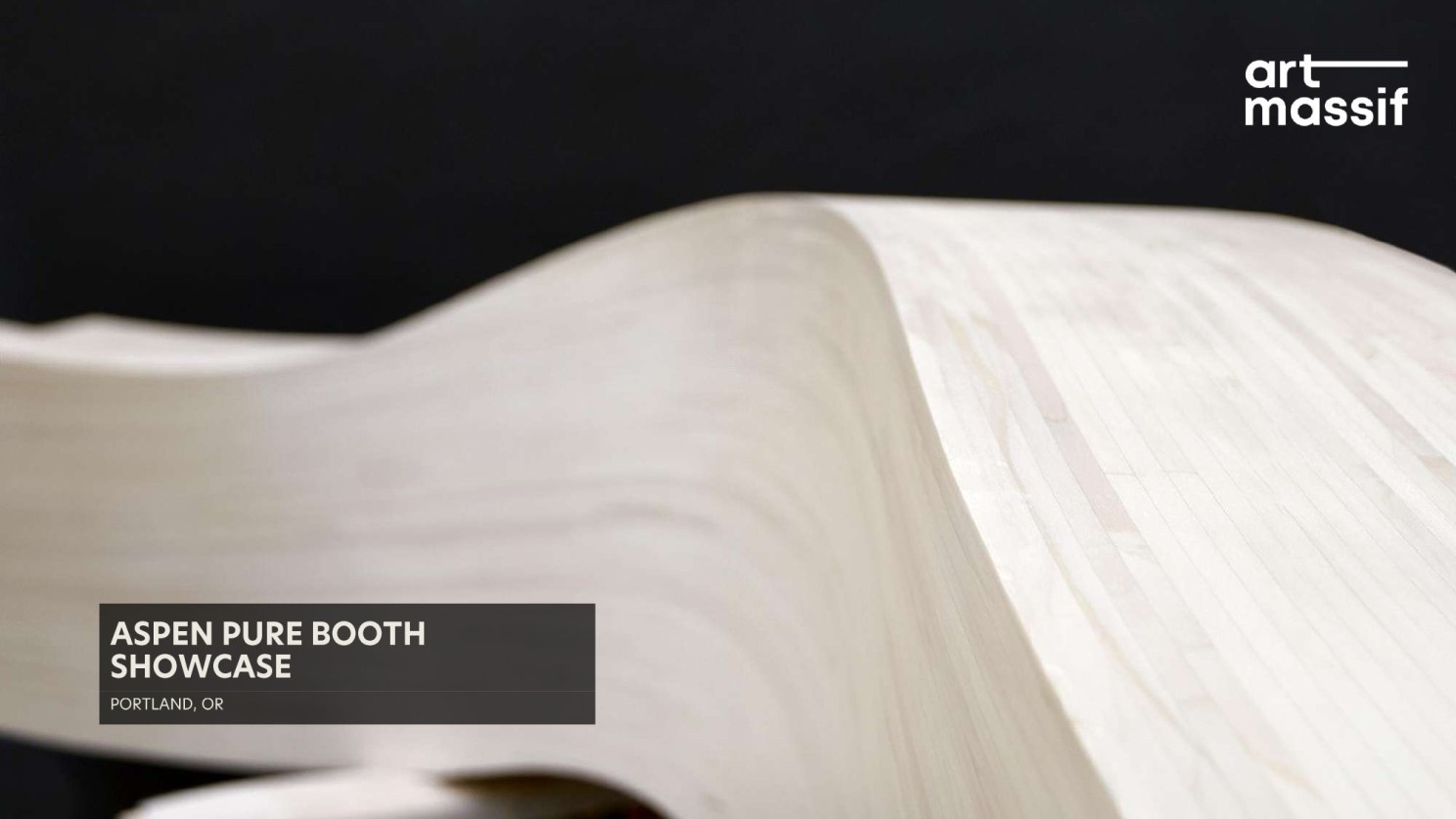
What came out is a different architectural language for glulam. Lighter, brighter, more uniform, with fewer knots and less character than Douglas Fir, southern yellow pine, or spruce. Nothing wrong with the traditional species in the right setting. But Aspen Pure gives architects and designers a modern look they've been asking for and couldn't get.
The performance is there too. From Art Massif's testing, the design values are equivalent or superior to spruce. Part of that comes from selection: they sort and grade the fiber themselves with their own equipment, so only the best material makes it into the structural product. Right now Aspen Pure runs as the equivalent of a 20f-EX layup, and they believe a more detailed process could push the values higher.
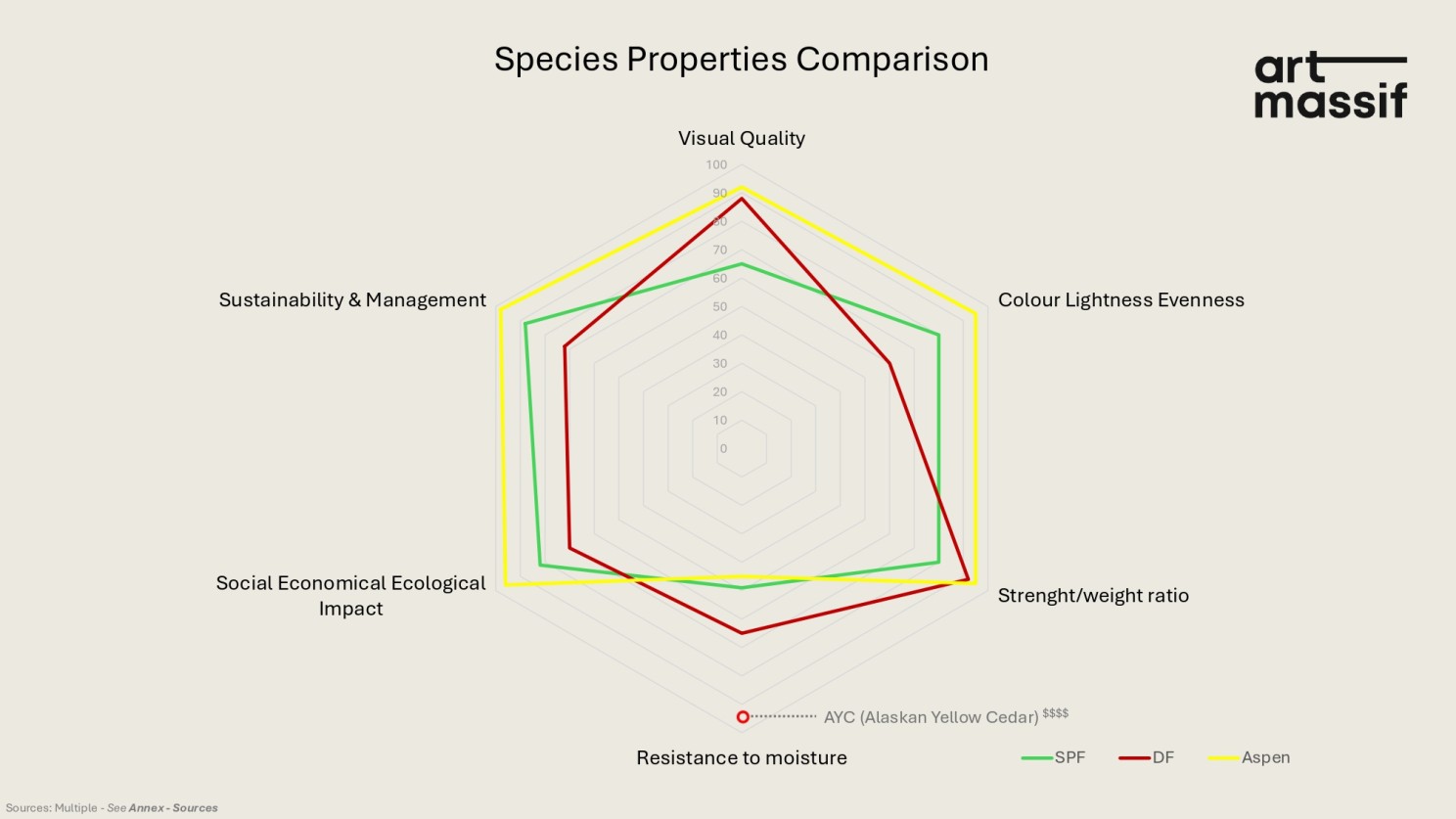
None of it was plug and play. Every species has its own character. Aspen can't be graded the way other species are graded, and it can't be kiln dried the same way either, so Art Massif developed its own drying methods to protect the fiber properties. Sourcing had to be built from scratch too, because structural-grade aspen supply didn't exist in the market.
They launched Aspen Pure in Spring 2026, and the reception from architects and designers has been strong.
But, you might have seen something else in the mass timber world challenging assumptions on what’s possible. And Art Massif played a role there too.
The Theater That Had to Grow From Its Site

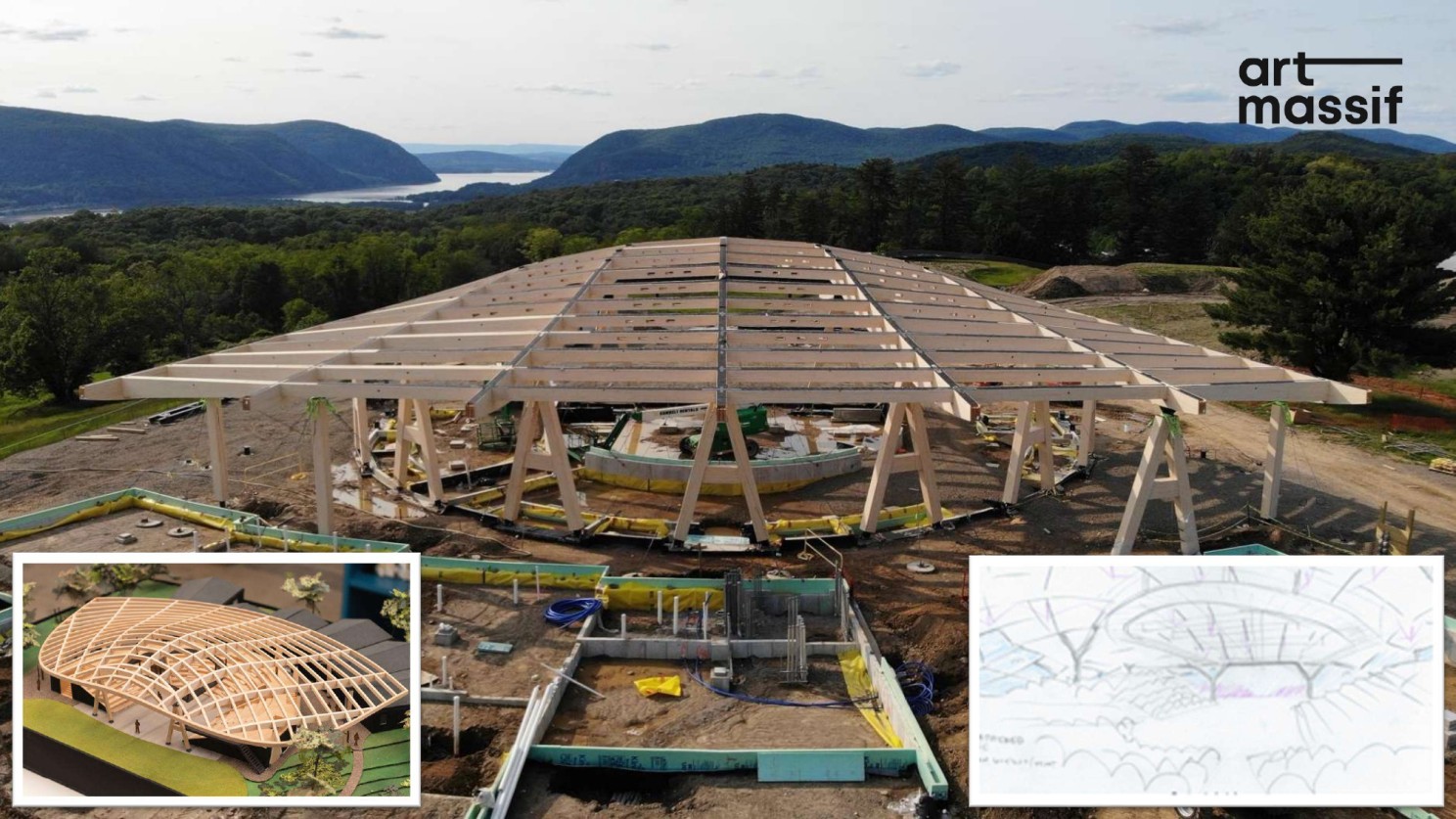
Hudson Valley Shakespeare's new permanent home, the Samuel H. Scripps Theater Center, opened with a ribbon cutting this spring.
The site sits in the middle of a valley with a mountain behind it, and the architect's intent was a building that belongs to that scenery, almost like it had grown from the site itself. That meant curves in every axis and every angle. It also meant a nonprofit client with a real budget ceiling and zero appetite for compromising the design.
The path between those two things was a comprehensive design assist phase. Months of it, with the architect, the engineer of record, the construction manager, and Art Massif's team working through hundreds of small challenges to make the structure constructible. Dave's description of the team: “no egos, nobody fighting for a bigger piece of the pie, everybody solving problems.”
Three moves from that phase stand out.
Straighten what nobody will notice.
The most important members stayed fully curved in both axes. But some elements, like certain purlins, could be straightened without changing the overall look. You can't spot it in the finished structure. Curves cost time and money, so they saved them for where the design needed them. That kept the project on budget and on schedule.
Borrow strength from what's already there.
A theater needs a steel catwalk regardless. The team put it to work as a compression ring, pulling load off the wood structure. Smaller connections, smaller members, lower overall cost, from a piece of steel the building was getting anyway.
Prove it out.
The original design had the roof in another material, because the team had doubts the timber decking couldn't follow a roof curved in all angles. Art Massif was convinced it could. So they built a full-size mock-up in their shop. Nobody asked for it, and nobody was paying for it. But the mock-up proved it was possible, and it showed the team how committed Art Massif was to the timber succeeding.
"This is where our dream thrives," Dave says of that phase. It's where their engineers and project managers find their value, working shoulder to shoulder with the architect and EOR until the ambitious version of the building is the buildable version.

Every one of those solutions existed because someone kept asking what was possible. Geneviève's concern is how rarely that happens.
Why Architects Stopped Asking
Art Massif has a phrase they repeat to designers: architects are allowed to ask for what they want.
That phrase shouldn't need to exist. Of course an architect asks for what they want. Except in mass timber, they often don't, and Geneviève traces it back to that lost expertise. Wood is an old structural material with a young workforce. When construction switched to steel and concrete, the knowledge of how to design and engineer with timber faded across every stakeholder group. Few schools in North America teach it. Architects are excited about the material, but if the engineers, builders, and reviewers around them aren't educated on it, the whole thing feels risky.
And risk gets answered with myths. It's not feasible. Change that part to steel, wood will be too expensive. Nobody can manufacture it. The design shrinks a little at every meeting until the ambition is gone.
Geneviève's answer is simple. Ask for it, and ask the right person for it. The manufacturers doing this work at a high level exist, and the capabilities go further than most of the industry realizes.
Asking is half the equation. The other half is a partner built to say yes.
Built to Say Yes
There's no machine you can buy off a shelf that makes 3D curved glulam. That's the first thing to understand about how Art Massif works. Their production team runs on the same everything's-possible mindset as the front office, so when a project calls for something no equipment exists for, they adjust their machines or build new ones.
How a 3D Curve Gets Made
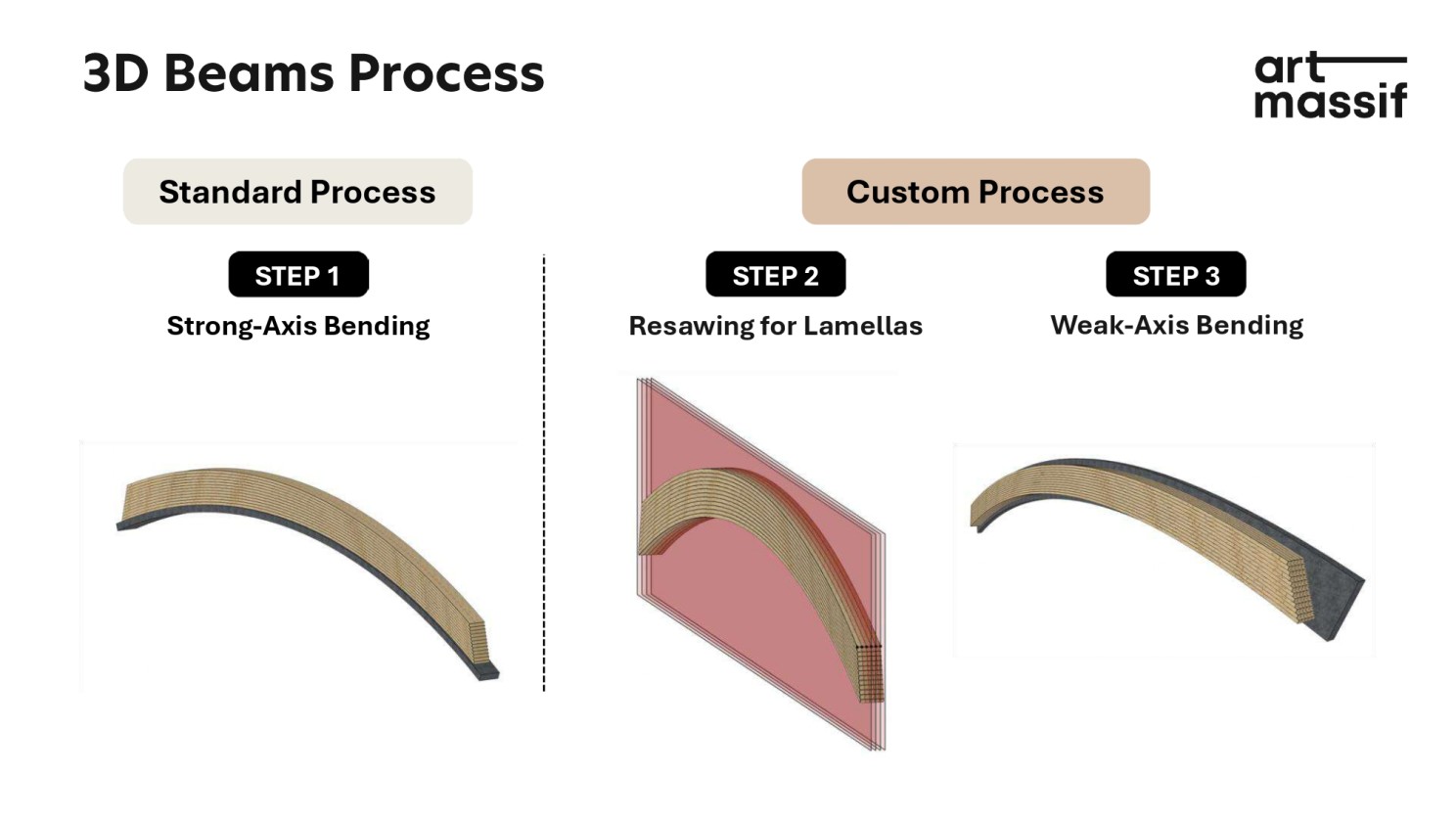
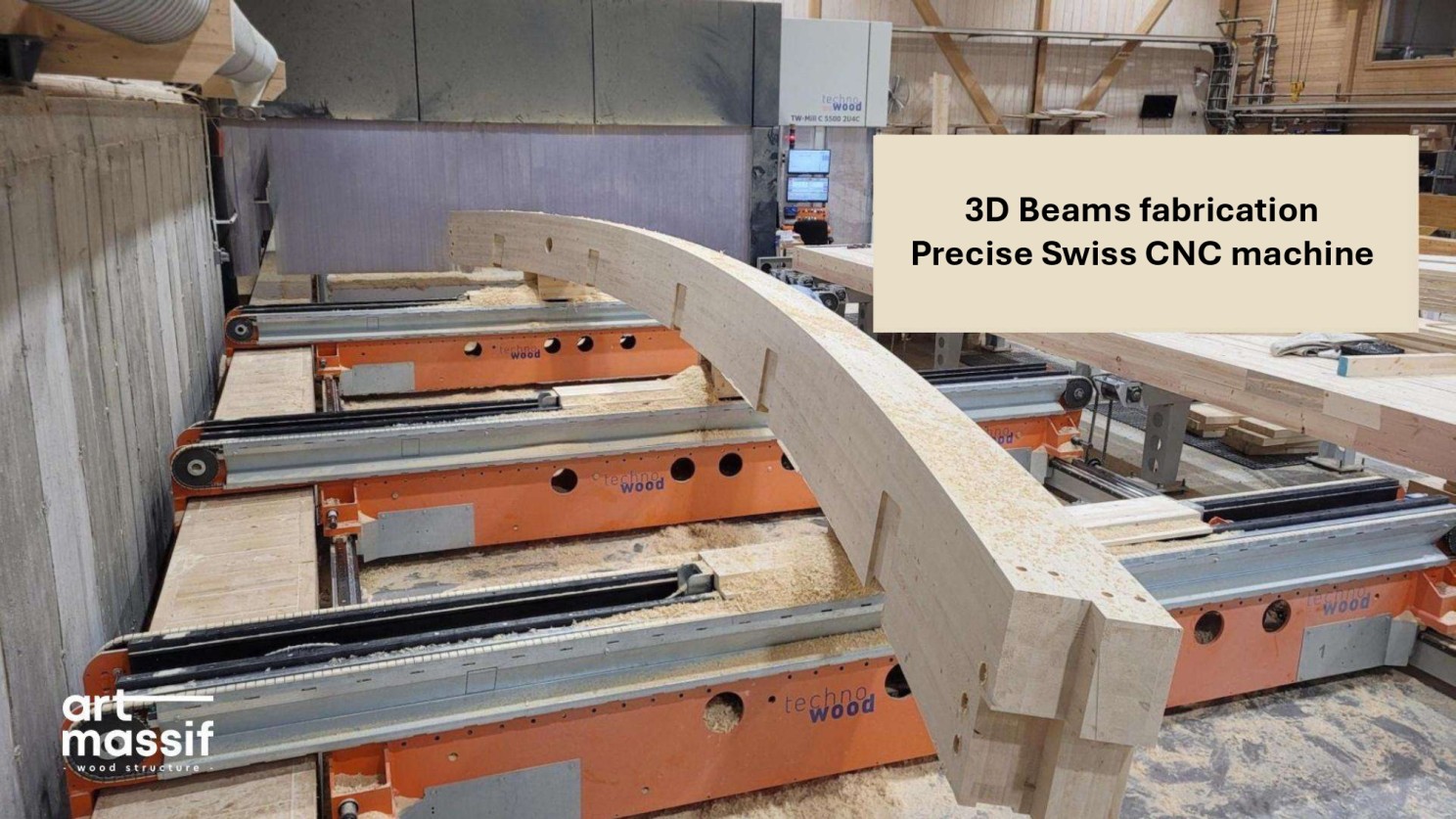
For a tight-radius member curved in both axes, it's a three-step process. First the member gets curved in one axis in the standard press. Then it's resawn into lamellas. Then those get curved in the second axis on a custom press Art Massif built specifically for 3D work. It takes real time and energy, and as Dave puts it, "it's not a cheap cubic meter." Which is exactly why they simplify shapes anywhere it won't change the design intent.
The equipment is one piece of a bigger structure: Art Massif can own nearly everything on a project when the project requires it. Design build or design assist from a blank page, backed by a large in-house engineering team. CNC fabrication on a high-end Swiss machine they acquired in 2021, precise enough that complex members in all angles fit perfectly on site. Finishing, fabrication, and installation with their own crews. And something rare in the industry: connection design and steel fabrication in-house.
The reason is de-risking. Every additional interface on a complex project is another chance for miscommunication, delays, or budget problems. Art Massif partners with others the majority of the time, and gladly. But where the right expertise didn't exist externally, they built it internally. For the client, that means one conversation and one accountability structure.
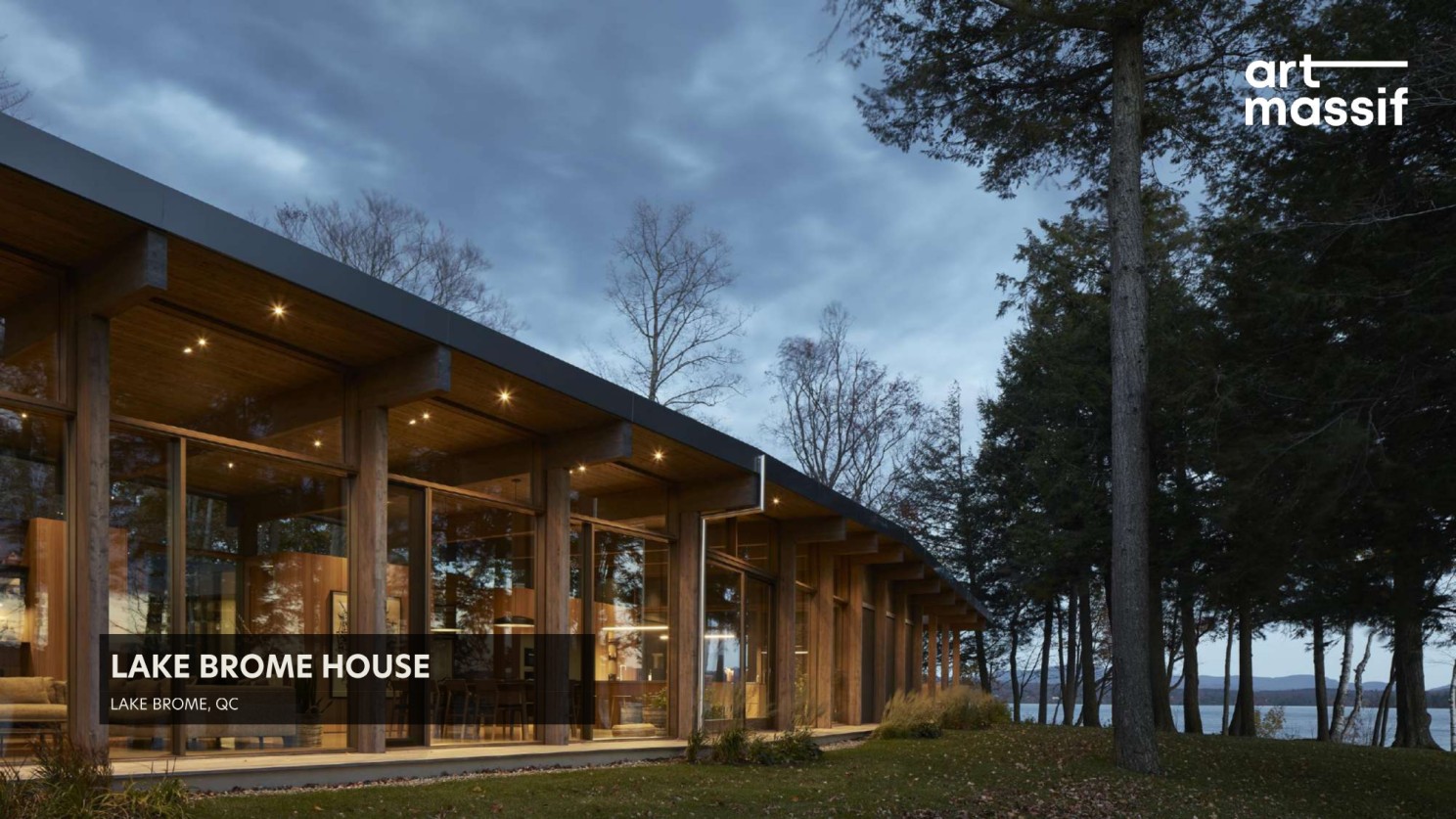
Where does all that capability aim? Geneviève's shorthand is quality or complexity. The 100,000 square foot, ten-story square box with huge volume is not their type of project. Theirs is the 15,000 square foot luxury home, the 30,000 to 40,000 square foot museum or arts center, the condo amenity space. Right now they're in construction on the 12th story of a condominium building, a penthouse level with a gym, pool, and spa in high-quality glulam.
All of it circles back to the advice they'd give any architect starting a first timber project.
Talk to Someone Who Knows
Geneviève's day-one checklist is short. Think about your grid. Think about efficient radii and repetition. But her bigger point sits above all of that: talk with someone who has real experience before you lock in your design. Timber is a different material from steel and concrete, and it changes how you take the very first step. Maybe in 20 years every school will teach it and this conversation won't be necessary. Right now, the shortcut is borrowed expertise.
Dave's version: involve your producer. Art Massif keeps a full pre-construction team ready to pick up the phone at any stage of a project, and they'd rather invest time educating a design team early than watch anyone rework plans mid-project against a budget and schedule.
And when the doubts start arriving in meetings, remember the phrase. Architects are allowed to ask for what they want.
If you're exploring mass timber for your own projects, your going to need the team, knowledge and connections to make it successful.
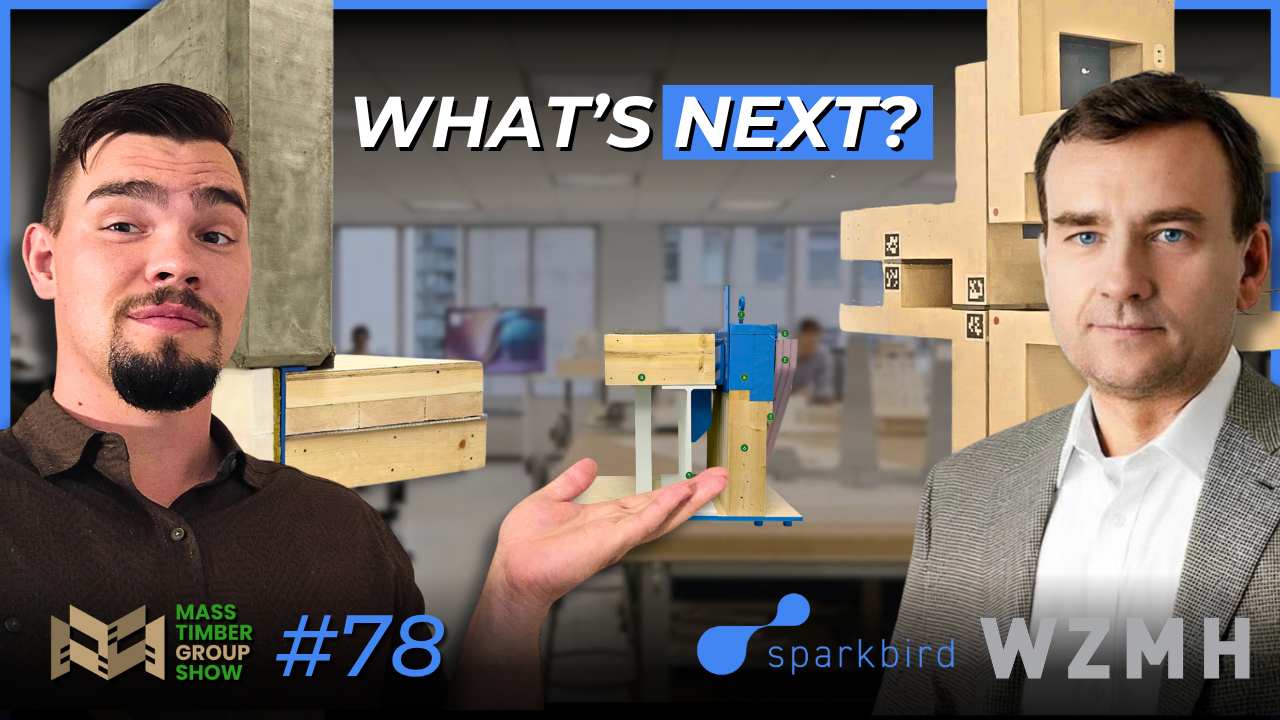
Stop Waiting for Better Building Products w/ Zenon Radewych of WZMH Architects
The building industry has a strange relationship with its own materials. Most of the people designing, engineering, and building things treat the products and materials as a fixed list of options. If the available products don't quite do what the project needs, the project bends to fit the products.
But not all. Some people have stopped accepting that. Instead, they’ve leaned into the “what if we had this…” or “what if we made that?” They've built the inventor’s mindset into their companies, literally and figuratively.
Zenon Radewych is one of them. He's a principal at WZMH Architects, a 65-year-old firm based in Toronto, and the person behind @sparkbird, their R&D lab where they don’t let what’s currently available limit their options. And now, they’re looking at mass timber.
This article is just one part of the newsletter where we cover who and what’s shaping the mass timber industry.
👉 Stay ahead of the mass timber industry & grow your network. Join Our Newsletter
A Lab Isn't a Department. It's a Permission Slip.
When most people in this industry hear “R&D lab,” they picture a big space with a big budget. A formal program. A roadmap. Milestones. Maybe a Ph.D. or two.
sparkbird isn't that. It's a corner of the WZMH office where people work on things that interest them, often without a deadline, often without a guarantee that anything will come of it. Ideas come from client meetings, from frustration with how a project went, from a side problem that showed up while solving something else. Some of those ideas take a month. Some take ten years. Some get shelved. Some get handed off to industry partners who can actually take them to market.
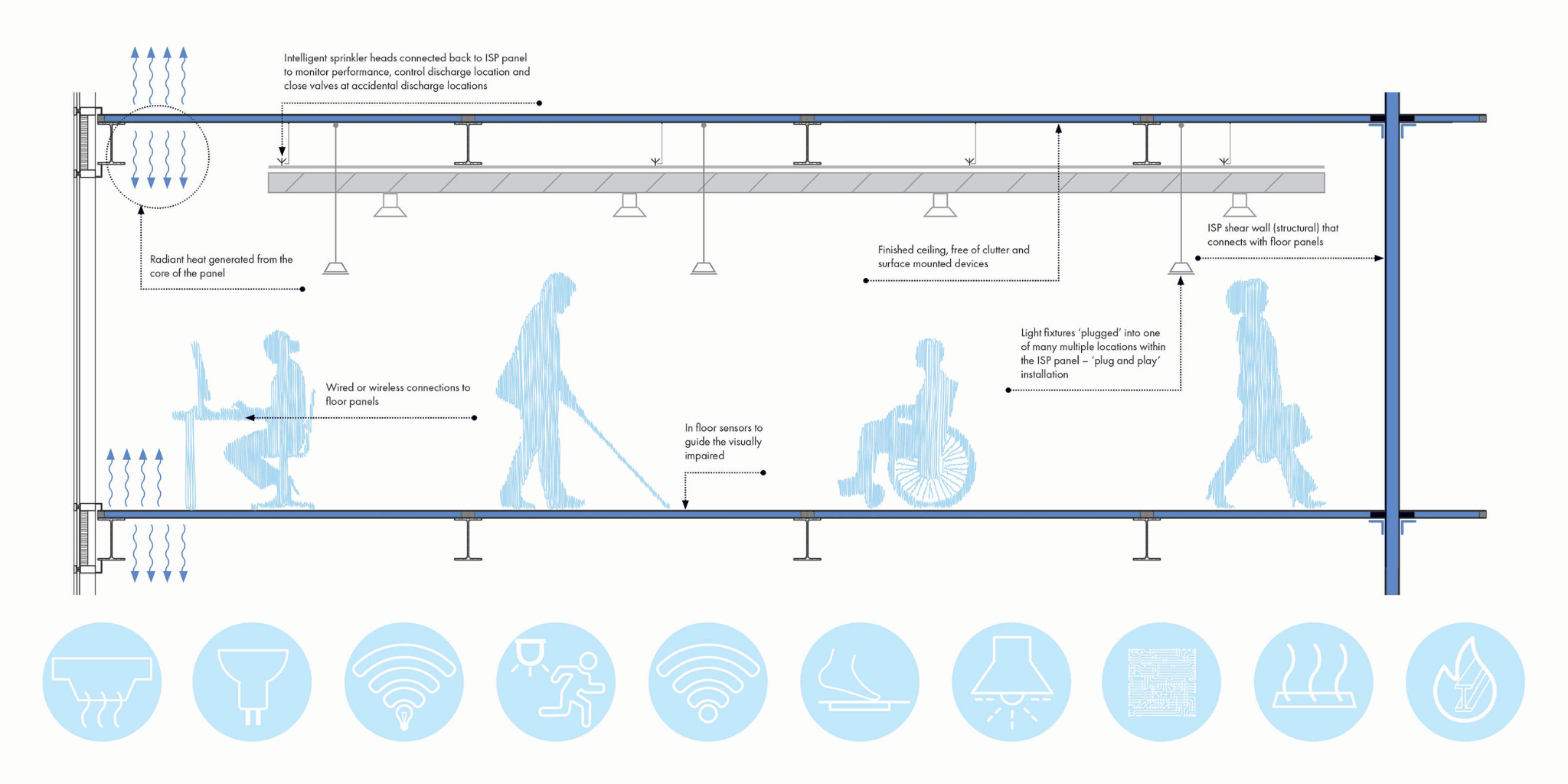
sparkbird's first invention, the Intelligent Structural Panel, started in 2017. It takes all the components and processes that go into constructing a floor and shear wall in a building and combines it into one product, including the mechanical, electrical, and IT. Microsoft saw an early mockup, invited WZMH into their IoT (Internet of Things) and AI Insiders Lab, and accepted them as the only architectural firm in the program.
When it comes to mass timber, four projects are live in the lab right now (and probably more by the time this article comes out - they move fast).
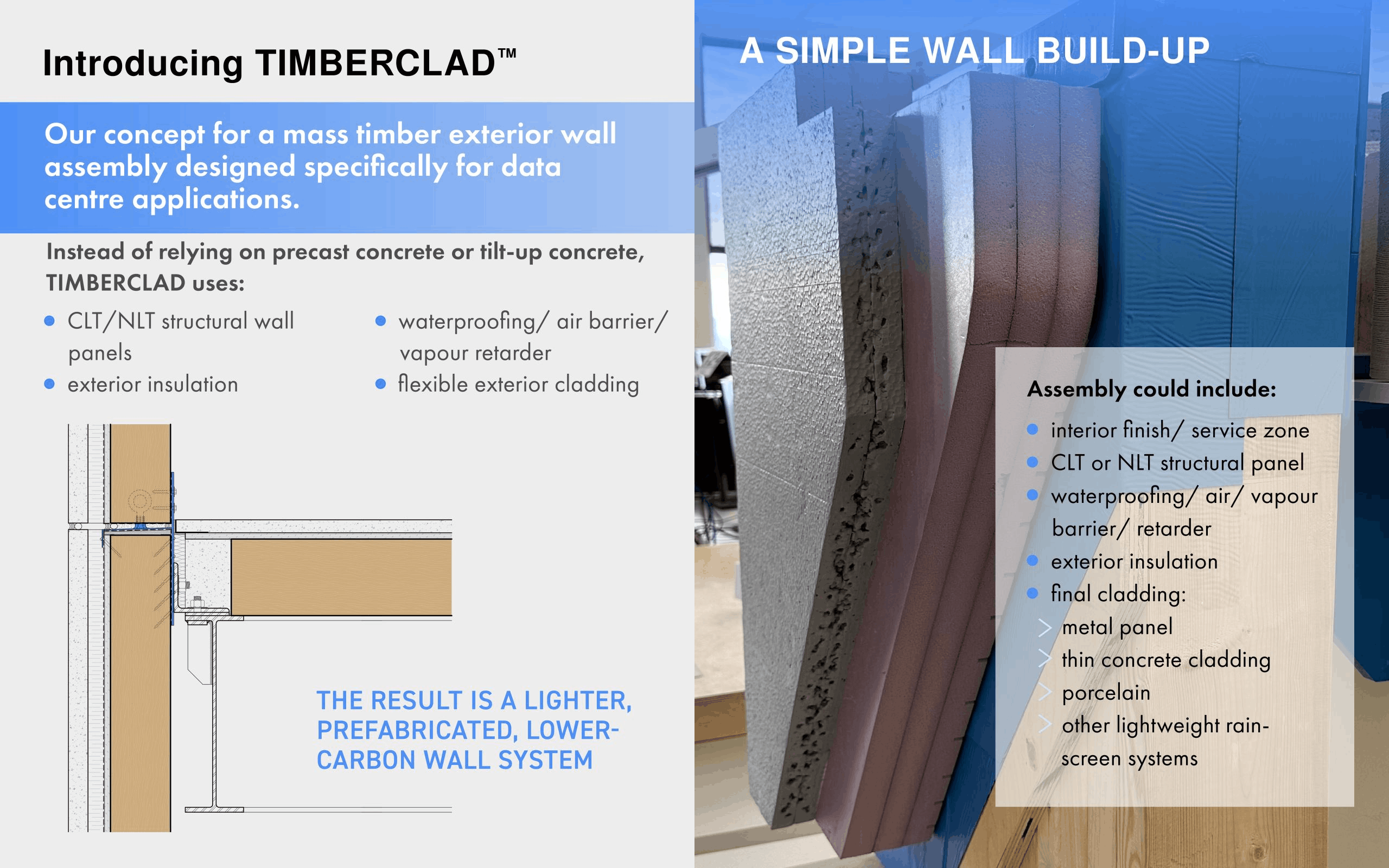
TIMBERCLAD™ is a mass timber exterior wall system aimed at data center construction. CLT or NLT panels paired with exterior insulation, air and water barriers, and flexible cladding options, designed to replace precast or tilt-up concrete walls. Lighter, prefabricated, lower-carbon. WZMH has a full-scale mockup of it in their office and is testing whether GripMetal between timber layers can improve composite action and stiffness under wind loading.
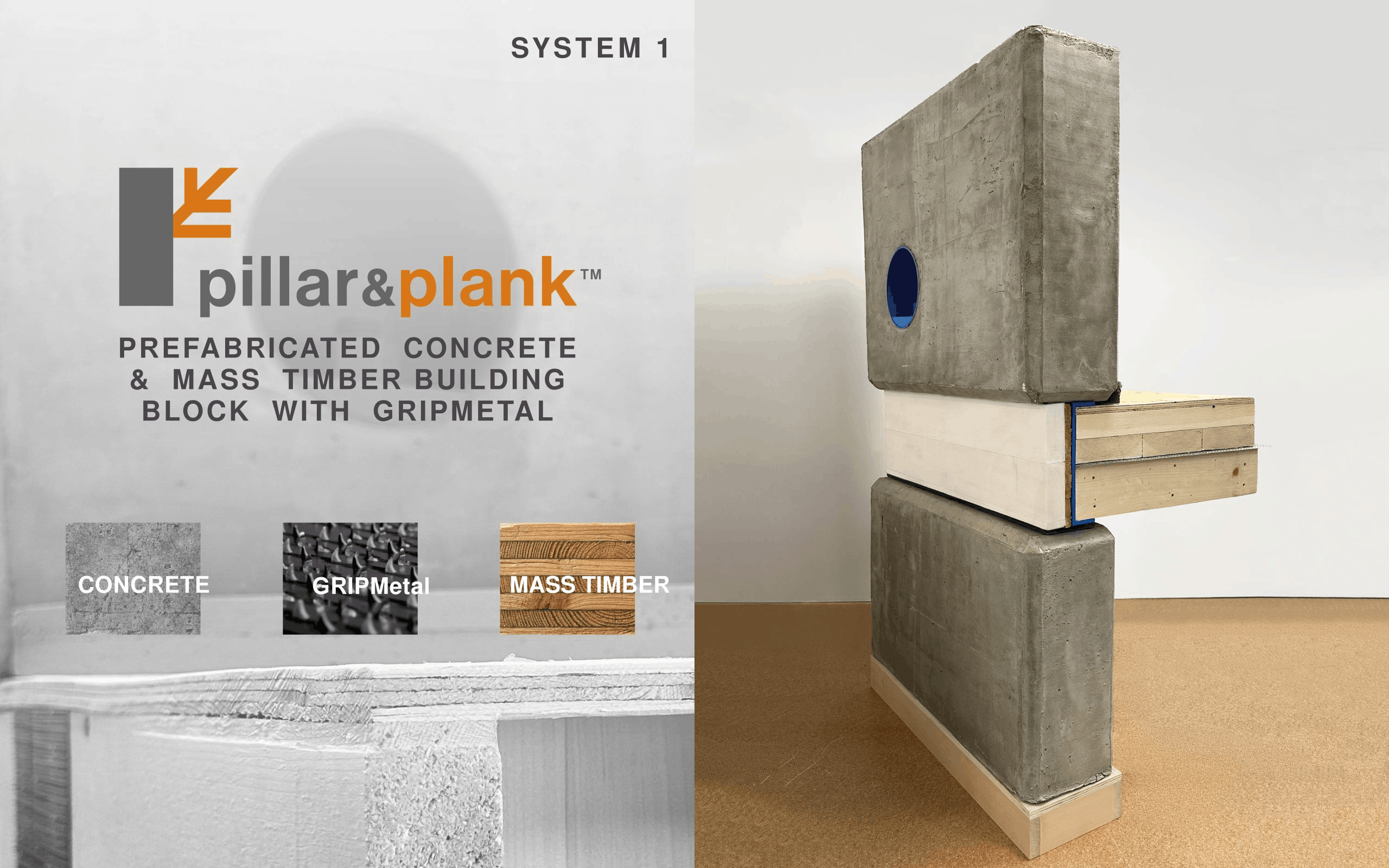
Pillar & Plank is a hybrid system aimed at multi-family residential, where clients want mass timber but are getting hit by cost and lead time. The structure combines precast concrete piers with mass timber floor panels, with or without GRIPMetal reinforcement. Precast plants exist across Canada, which helps with supply chain and price certainty. The pitch is the same as most good hybrid systems: use each material where it makes the most sense, rather than forcing one material to carry the whole building.
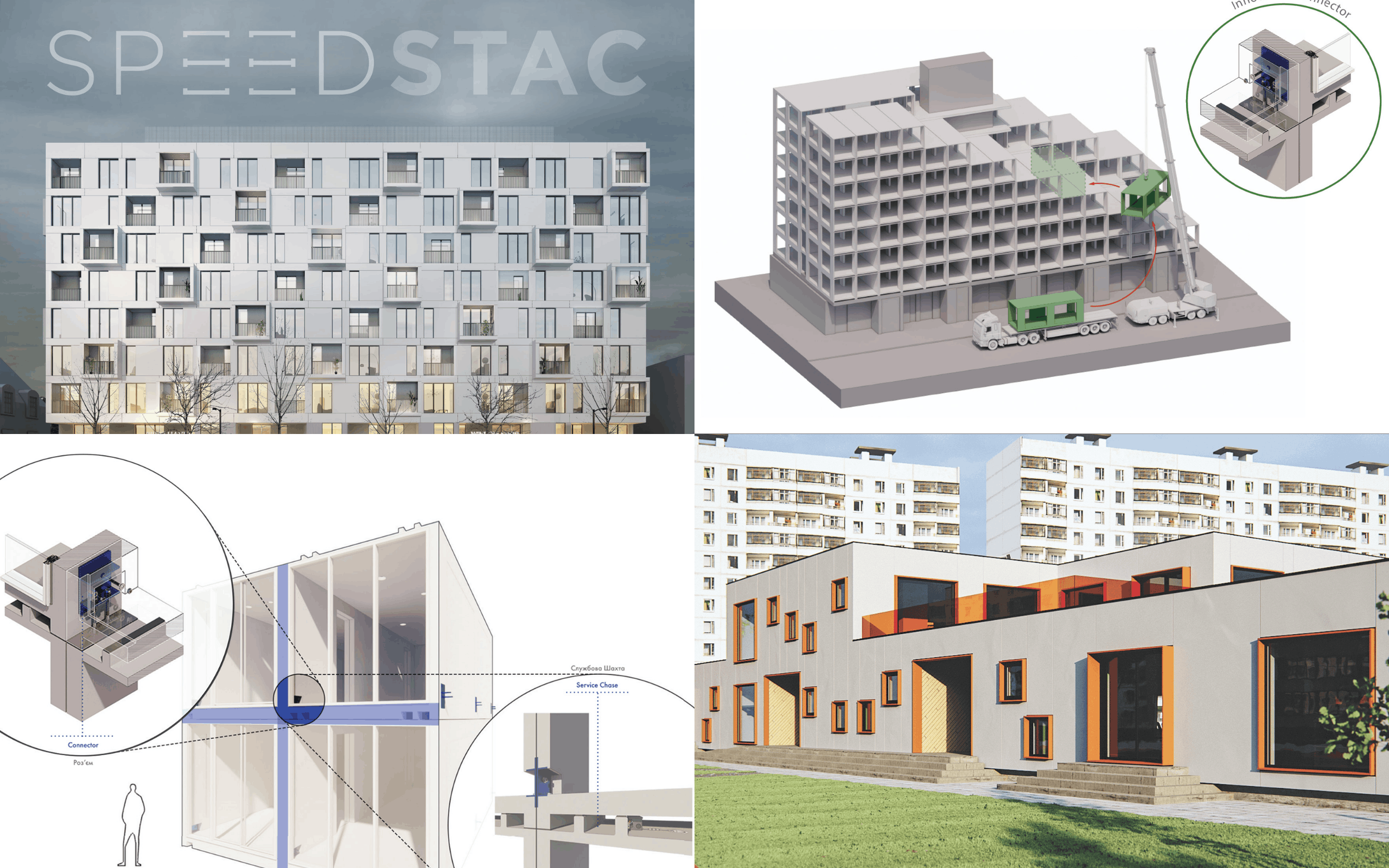
Speedstac is a modular building block system with built-in electrical and plumbing, designed to slide into damaged buildings by crane and replace destroyed sections without demolishing the whole structure. It started as a North American housing solution and pivoted to Ukraine after the 2022 invasion. The dimensions of Soviet-era apartment blocks turned out to match Speedstac modules almost exactly. WZMH won the Architect's Award at the 2023 Rebuild Ukraine competition, sponsored alongside Autodesk and Kingspan, designing 200 residential units for Kharkiv's north Saltivka district. A Speedstac kindergarten concept goes up in 10 working days. The system has both concrete and mass timber versions.
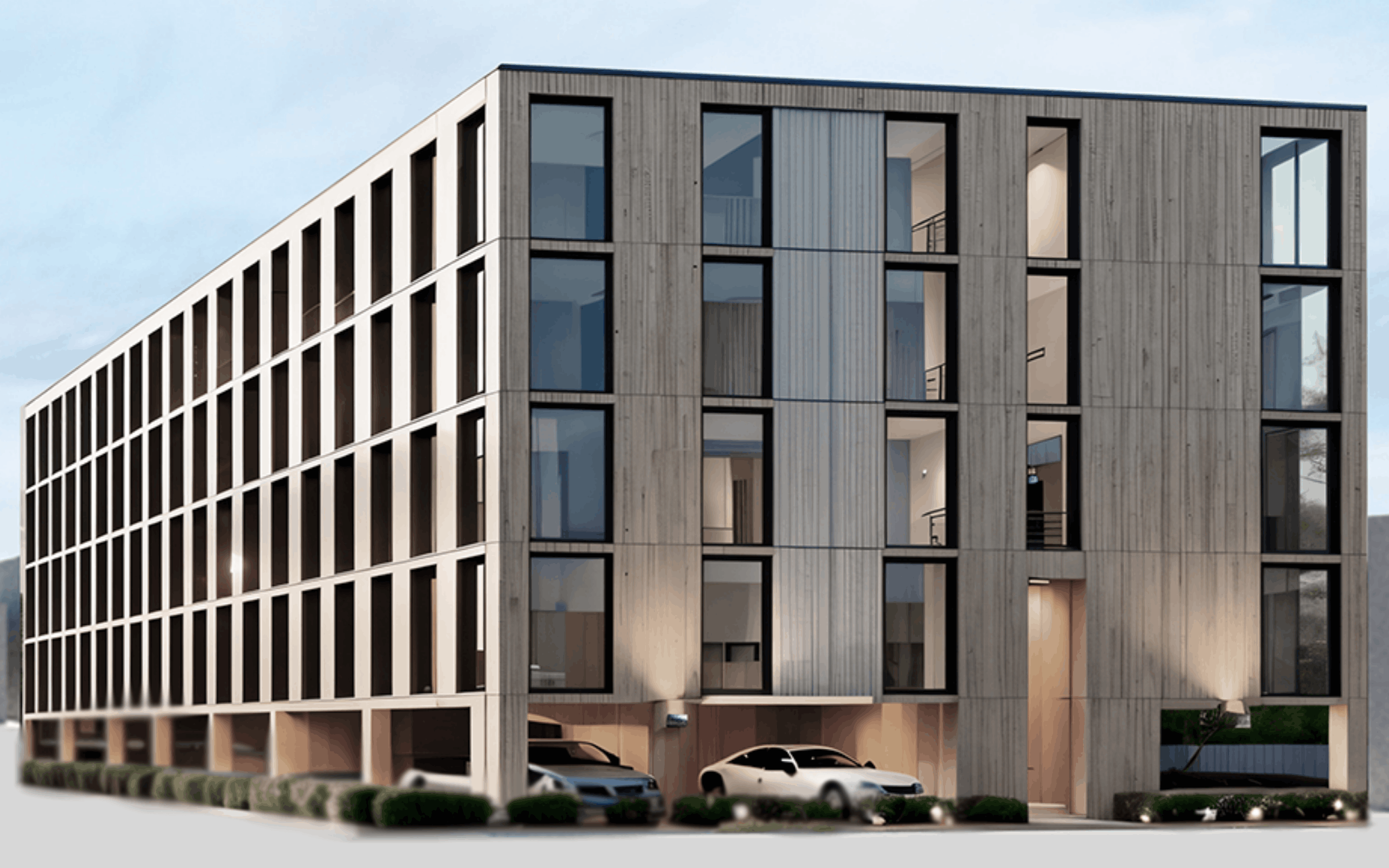
ELEVATE is the housing model. Build rental apartments on stilts over under-used community sites, decentralize the mechanical room into in-suite utility closets, and structure the deal so the host institution gets a revenue stream instead of selling land.
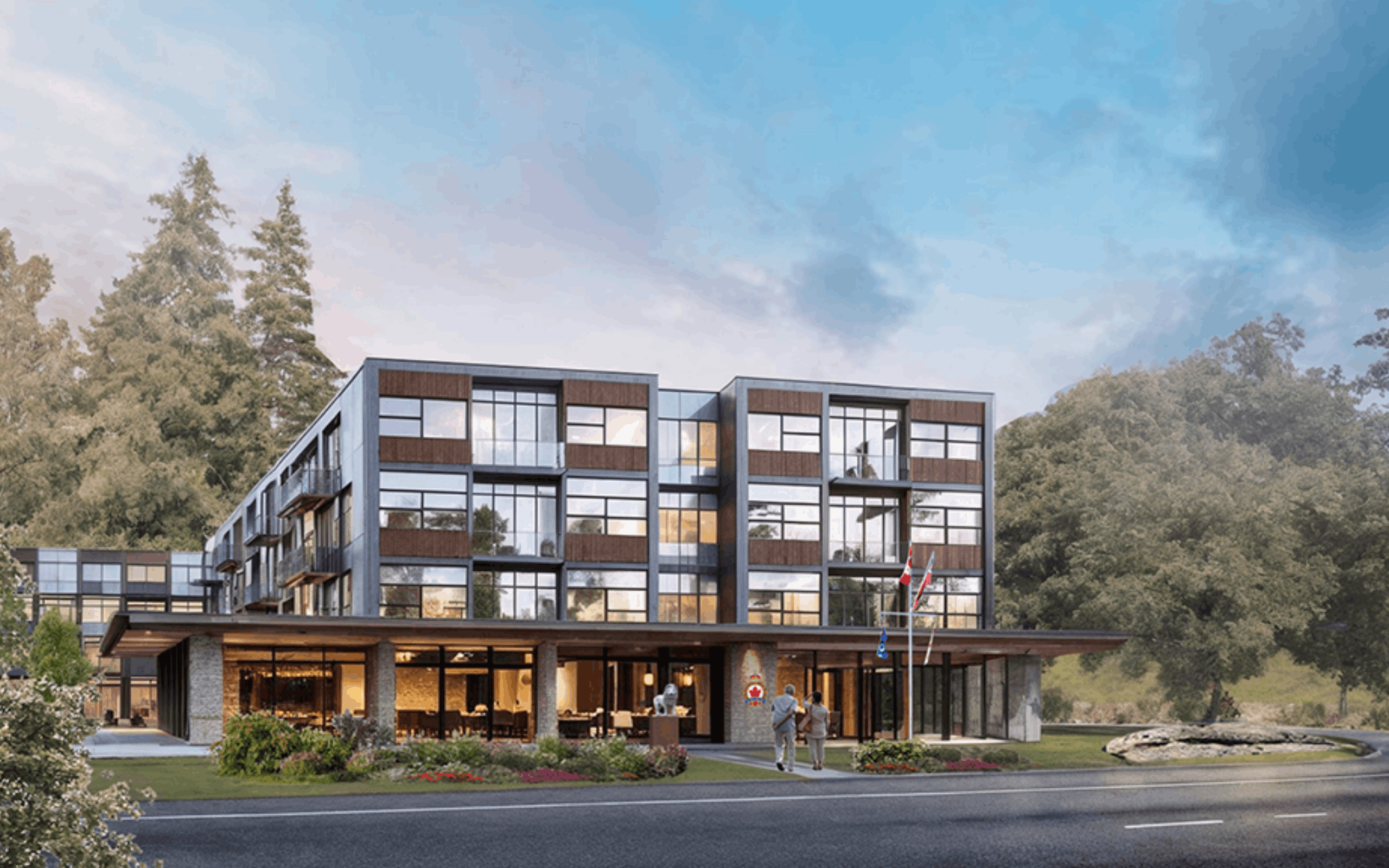
The first live project is in Bala, Ontario, where WZMH is replacing a 1970s Royal Canadian Legion hall with a larger legion facility on the ground floor and apartments above. The legion's signature semi-circle red brick bar will be dismantled and reinstalled in the new building. Demolition is targeted for May 2026. The same platform has been proposed for Toronto library sites.
None of those came from a strategic plan. They came from a team that was given permission to follow what looked interesting. The output is what happens when you keep that permission slip valid for a few years.
If a lab is just a permission slip, the question becomes: what does giving that permission actually do for the firm?
What Running a Lab Actually Does for the Firm
The easy answer is that the lab produces ideas, and some of those ideas turn into products. That's true, but it's the smallest part of what sparkbird has done for WZMH.
The bigger benefits show up in the day-to-day business.
The first is talent. People want to work somewhere that's doing exciting things. In a market where every firm is fighting for the same hires, it’s a real recruiting advantage. New staff gravitate towards the opportunity to invent and explore alongside their more traditional architectural work.
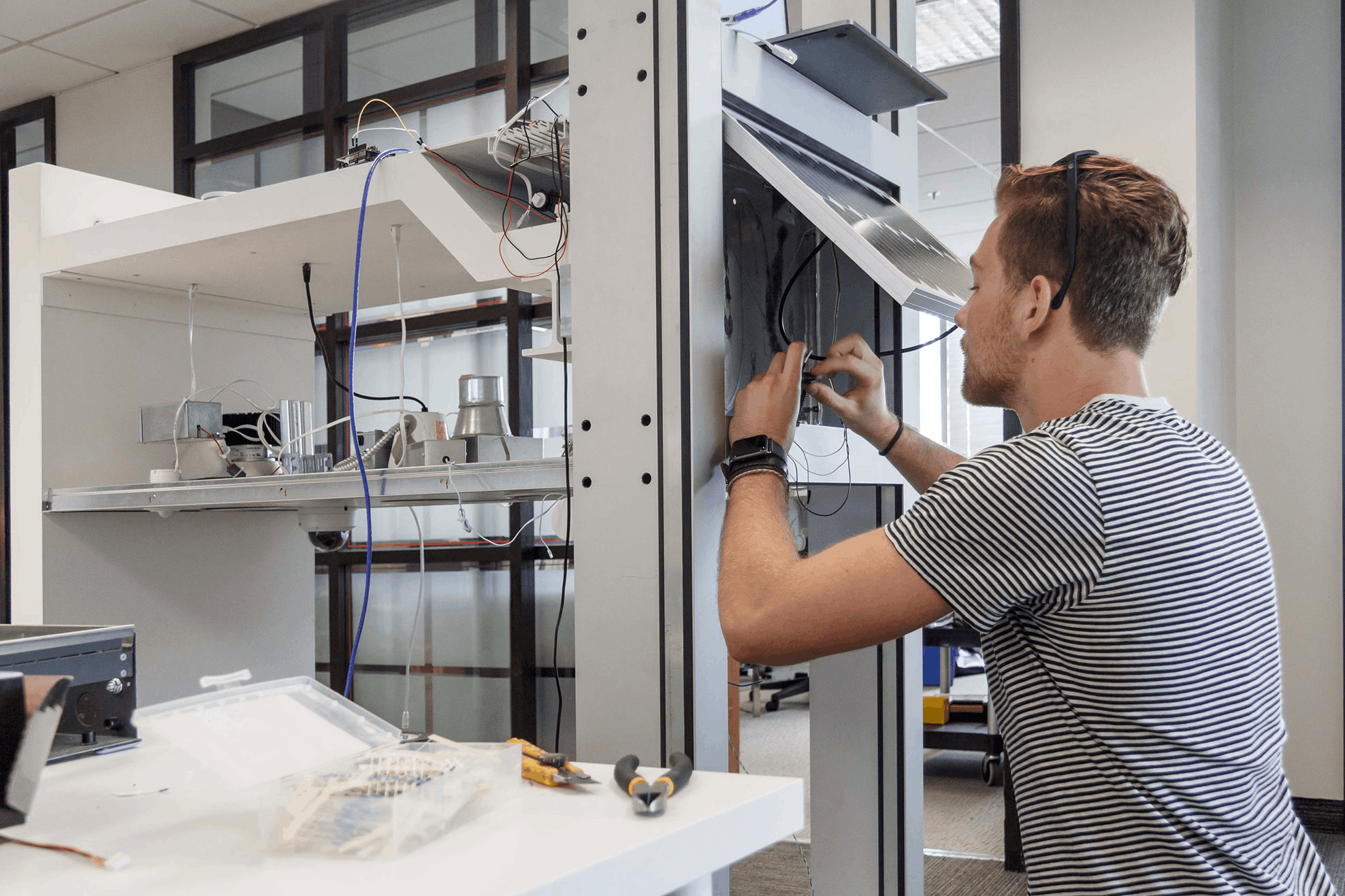
The second is competitive positioning. When WZMH competes for a project against other firms, they’re all showing up with similar portfolios, similar past projects, and similar people. Nobody's resume is really winning the interview. Zenon says sparkbird is what differentiates them.
“We could spend business development dollars on taking clients golfing and for dinners. Or we could spend that money in the lab here. Honestly, the results we're getting for spending the money in the lab are way better.”
The lab is the signal that the firm thinks differently, which is what clients hire firms for in the first place. The lab doesn't even have to be working on the client's specific project. The fact that the firm is the kind of firm that runs one says enough.
The third benefit is the longest to materialize and the hardest to measure. It's a different way of thinking. Teams that have spent time prototyping in the lab bring a different mindset back to their day-to-day work. They're more willing to question why something gets detailed a certain way, more comfortable proposing an unfamiliar assembly, more curious about what's actually possible.
The bet isn't on any single product. The bet is on what the lab does for the firm over time. Talent, positioning, mindset, and occasionally a real product that changes how something gets built.
If a lab does all that for one firm, the obvious question is what the industry would look like if a lot more firms ran one.
What If More Firms Did This?
Construction is one of the only major industries that hasn't fundamentally changed in a hundred years. Manufacturing has. Healthcare has. Aerospace has. The list of industries that have made big productivity leaps in the last fifty years is long. Construction isn’t on it.
There's no shortage of explanation for that. Fragmented supply chains, slow code cycles, project-based risk, conservative clients, thin margins. All real. But there's also an explanation that doesn't get said out loud often enough: most of the people designing buildings don't see inventing the parts - as part of their job.
Manufacturers are running businesses that depend on selling things they've already figured out how to make. The economic incentive for radical change sits with whoever is willing to spend time and money on something that might not work. And historically, that's been a small number of researchers in universities, an even smaller number of firms with their own labs, or the occasional tinkerer trying to make something better.
If a hundred more firms ran labs, even modest ones, that changes. Hundreds more people experimenting with hybrid assemblies, alternative materials, new connections, smarter mechanical layouts. Most of those experiments wouldn't go anywhere. But a few would.
A network of firms running labs, sharing what works, handing things off to producers who can ship them, moves things a lot. Mass timber in particular is the kind of category that would benefit from this. The product set is still relatively small. The supply chain is still developing. The cost curve is still figuring itself out. Every additional firm pushing on what mass timber can do, structurally and economically, accelerates how fast it becomes a default option instead of an alternative one.
The choice in front of most firms isn't whether to build a sparkbird or not. It's whether to keep treating innovation as something that happens somewhere else. The ones who’ve embraced the inventor mentality are already shaping what mass timber gets to be next.
If you're exploring mass timber for your own projects, one of the first questions is often: who actually makes the materials?
To help with that, we created a Mass Timber Producer Map featuring 39 North American producers and fabricators. You can explore manufacturers near your project, see the products they produce, visit their websites, and connect directly with them.
👉 Get access to the Mass Timber Producer Map by joining our newsletter!
Getting the Full Mass Timber Look Without the Price w/ Mike Lipke of Torzo Surfaces
Hybrid mass timber is often the smarter structural choice. But it comes with a trade-off most teams just accept. The exposed steel beam. The run of ductwork overhead. A finished building that doesn't quite look like the one in the renderings. You wanted all wood. You got wood plus everything you had to leave showing.
Mike Lipke has spent over a decade making sure you don't have to accept that. He's the president and owner of TorZo Surfaces, the only U.S. manufacturer of Thin CLT panels. Thin sheets of cross laminated timber, available in almost any species, made from new material or remanufactured scrap. He's been making them since 2011, well before most people in the U.S. had heard of CLT.
In this piece Mike breaks down what Thin CLT actually is, the problems it solves on a jobsite, how it gets made from both new wood and salvaged material, and what the demand for it says about where mass timber is headed.
This article is just one part of the newsletter where we cover who and what’s shaping the mass timber industry.
👉 Stay ahead of the mass timber industry & grow your network. Join Our Newsletter
What Thin CLT Is and What It Solves
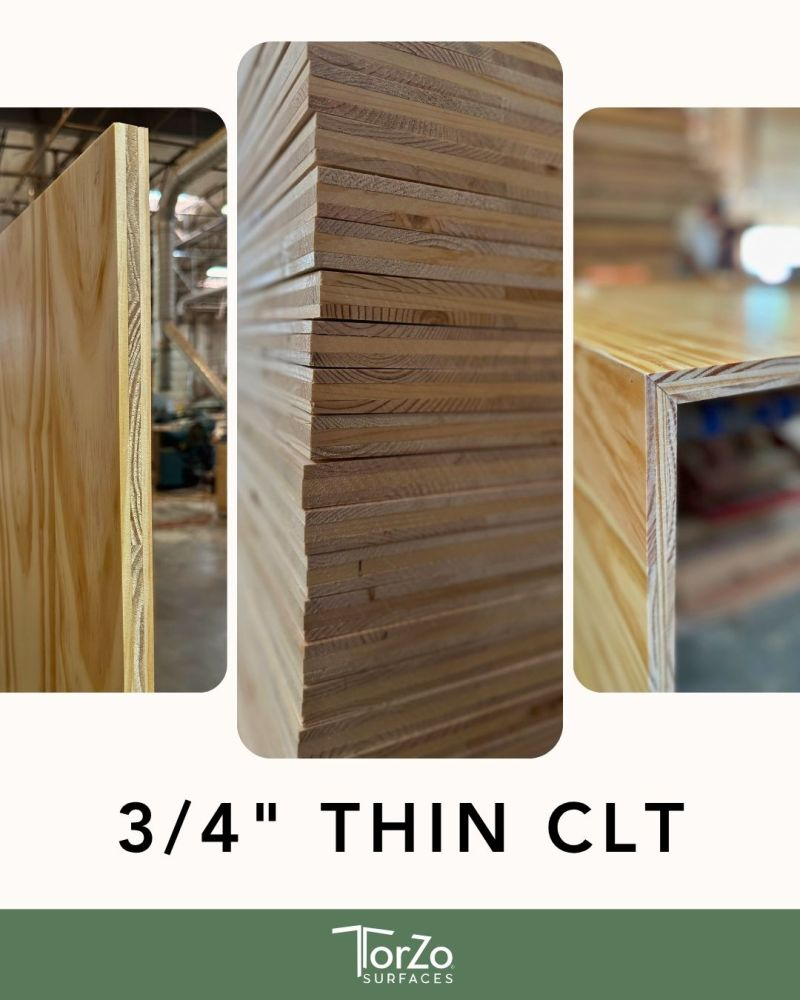
Thin CLT is a 4x8’ cross laminated timber panel ¾” thick (standard, they can make custom sizes too). It's designed that way to be familiar with crews used to working in standard plywood and OSB dimensions.
Most of the time, the job is cladding. In a mass timber building, that usually means covering up something that isn't wood. A steel beam. Concrete. Mechanical and HVAC ducting. You wrap it in a panel so it looks like mass timber. Most commonly, Mike sees it used as a beam wrap.
A lot of mass timber buildings put a steel beam in here and there, and the team wants it gone. Covered. Looking like the rest of the wood. Normally, that means using a different wood product (and mismatched look), or a full-sized mass timber piece that comes with a bigger price tag. But, with Thin CLT, you don't need the full-sized panel to maintain the consistent aesthetic.
On a big field nobody sees the edge of a panel in the middle of that wall, nor is it carrying any sizable load. There's no reason to pay for the structurally sized members there.
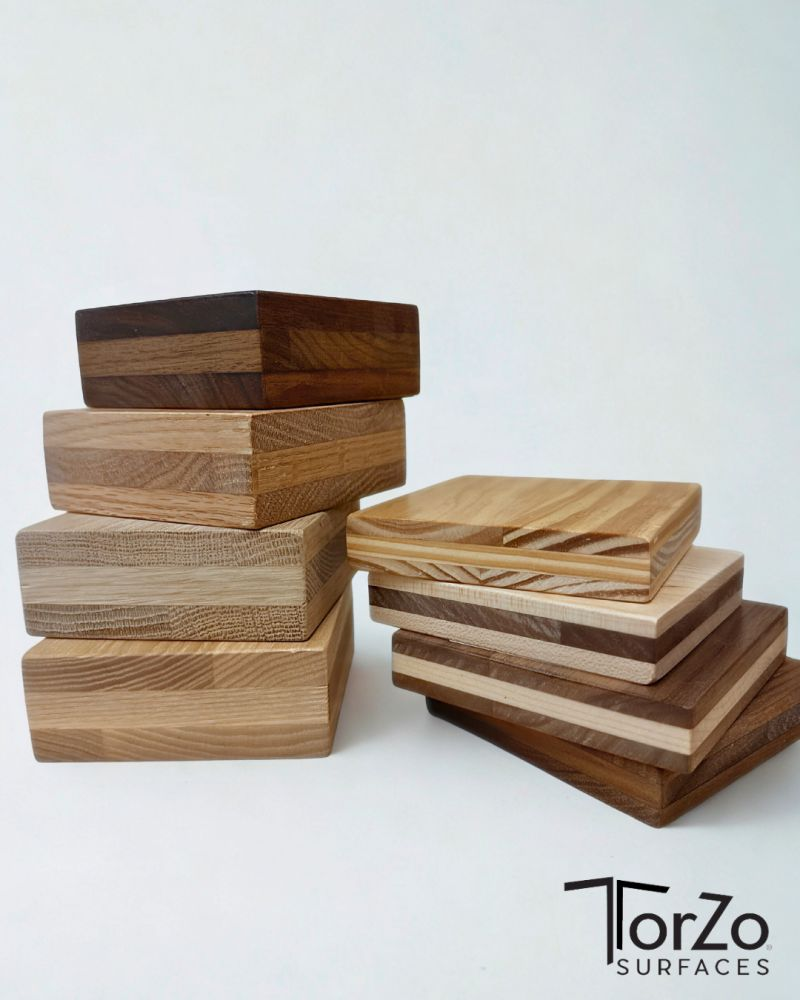
Instead, Mike laminates the exact same species, grade and finished material onto a cheaper backer, getting the exact same look, and saving the money. The whole wall looks like the same CLT construction as the main structure, even when most of it isn't.
How It's Made: New Wood and Salvaged Scrap
The new-wood process starts with standard dimension lumber. Two by fours, two by sixes, any species. Torzo re-saws it into thin layers, glues the strips into sheets, then laminates the sheets together in a normal 3-layer CLT pattern to make the panel.
You might be thinking, why not just use a single layer of the face material? In a perfect world, or with a perfect material, that would work. The problem is that wood isn’t perfect.
It moves. It drys. Bends. Warps. And twists. And then, no 2 pieces are alike. They do all that in different ways, times, and cycles. Using just the face material in a single layer would give you a very unstable material. Using multiple layers and putting the more “spirited” pieces in the middle stabilizes and distributes all that action across the panel and keeps it stable.
So when you want a “clear” panel look (no knots, checks, decolorization) you can get a perfectly clear face while the knottier material goes inside (the middle) where nobody sees it. The face (and/or the back) match what the customer wants. And nothing gets wasted.
.png)
Mass Timber in the Data Center Boom w/ Erik Barth of Gensler
Office buildings in major U.S. metros are sitting at roughly 20% vacancy. Data centers? Less than 1%. Right now, the U.S. is building data centers at a pace the construction industry has never seen, and no other commercial real estate category is close.
For the mass timber world, that's a real opportunity. The carbon math is there. Mass timber runs roughly 35 to 40% less embodied carbon than steel and up to 60 to 70% less than concrete. The buildings themselves run 500,000 to a million-plus square feet apiece. And the speed advantage of prefabricated mass timber lines up with one of the things data center owners need most: a lot of square footage built fast.
Erik Barth, AIA is one of the people figuring out what doing this well actually looks like. He's a Senior Associate at Gensler in Boston and leads the firm's Mass Timber Collaborative, a team that's been working on mass timber projects for roughly seven years. In this piece, Erik walks through where mass timber fits in the data center boom, why Type III construction has become the sweet spot, and how to design a building today that doesn't end up half-empty in 2040 for the same reasons a lot of office towers are now.
👉 Stay ahead of the mass timber industry & grow your network. Join Our Newsletter
Where Mass Timber Fits in the Data Center Boom
The demand picture for data centers is unlike anything else in commercial real estate. Computing power keeps growing, and that power needs a physical home. Storage and processing have to live somewhere, and they have to be close enough to power infrastructure and fiber to actually work.
That's why data center location is so constrained. Three factors have to overlap: serious power infrastructure, access to fiber cable, and affordable land. Where all three line up, you get a viable site. Most of the time that's outside major urban cores, which is why data center clusters form in specific regions rather than spreading evenly across the country.
Most of these buildings are one story, sometimes two.
Can the Structure Handle It?
One question that comes up with mass timber and data centers is whether the structure can handle the weight of high-density equipment. Erik's experience is that GPU and CPU loads are the defining structural driver, not the cooling system. His team solved for that with a five-ply CLT panel on a steel primary system, with a topping slab. That assembly handled the load comfortably for the projects they've worked on.
A single-story building is structurally simpler. You're basically putting a roof on a slab-on-grade. Two stories adds efficiency by stacking colos (colocations, the server rack groupings) but raises the structural complexity. Either configuration works for mass timber, depending on the site and the program.
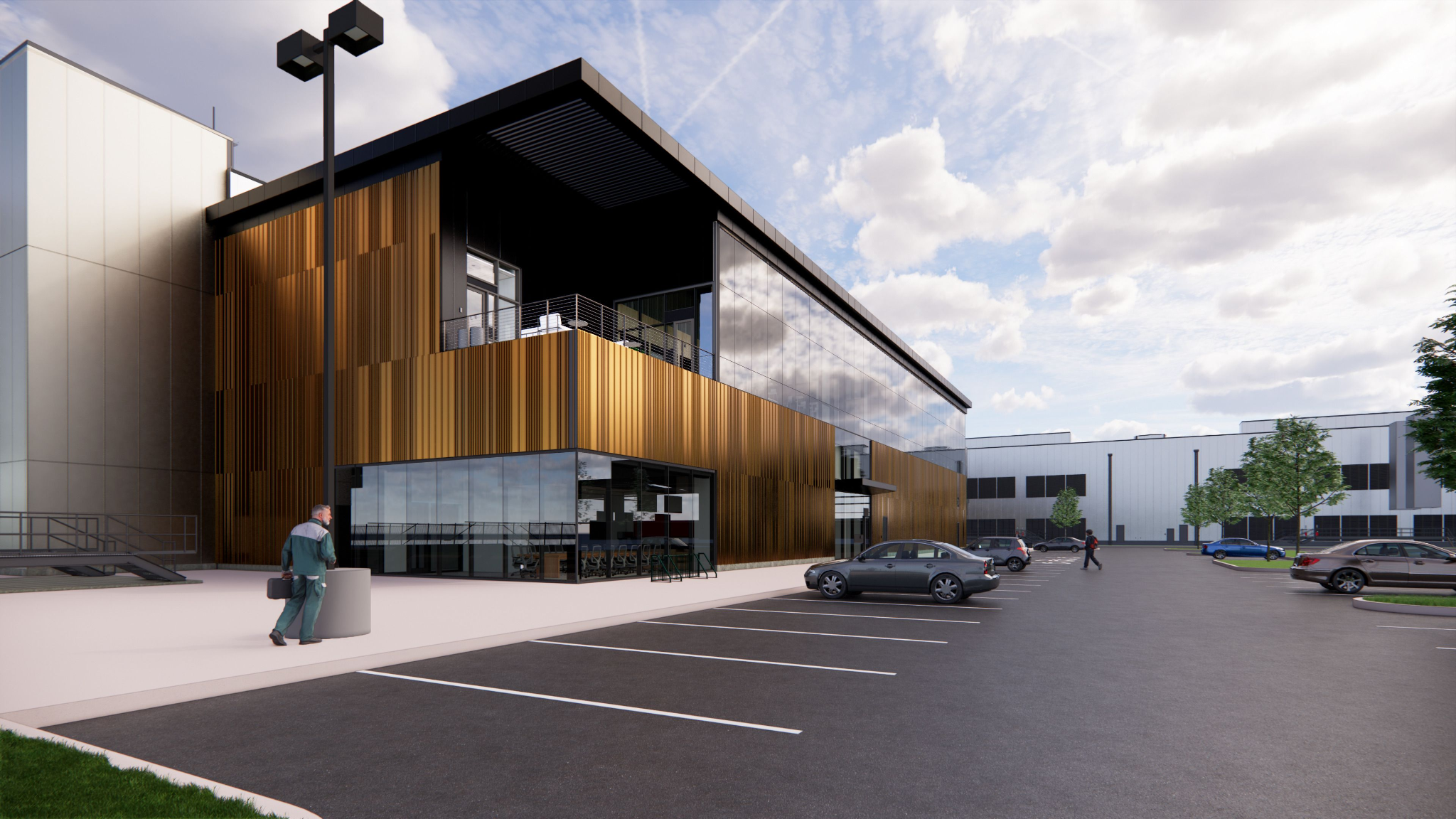
The pitch for mass timber inside that program comes down to two things. First, the sustainability and biophilia story is real. Lower embodied carbon than steel or concrete, a positive economic impact for rural forestry communities, and a natural material that the operations staff inside the building actually get to be around. People don't always think about data center occupants because the buildings exist to house equipment. But these facilities need staff to monitor that equipment around the clock. You don't turn a data center off. The people working in them benefit from being around wood, especially over long shifts.
Second is speed. Mass timber gets prefabricated off-site and assembled on-site with smaller crews and shorter timelines than steel or concrete. For a building type that has to come online fast, that's a structural advantage in two senses of the word. The construction itself is also faster, lighter, and quieter, which makes mass timber a better neighbor in the communities where these buildings go up.
The case for mass timber in data centers is clear. The harder question is how to actually permit one.
The Code Path: Why Type III, Not Type IV
Code is where data centers get complicated. The scale alone is a challenge. You're talking about 500,000 to a million-plus square feet under one roof, with massive air handling, heavy equipment, and high power loads. Historically, data centers have been built as Type II construction.
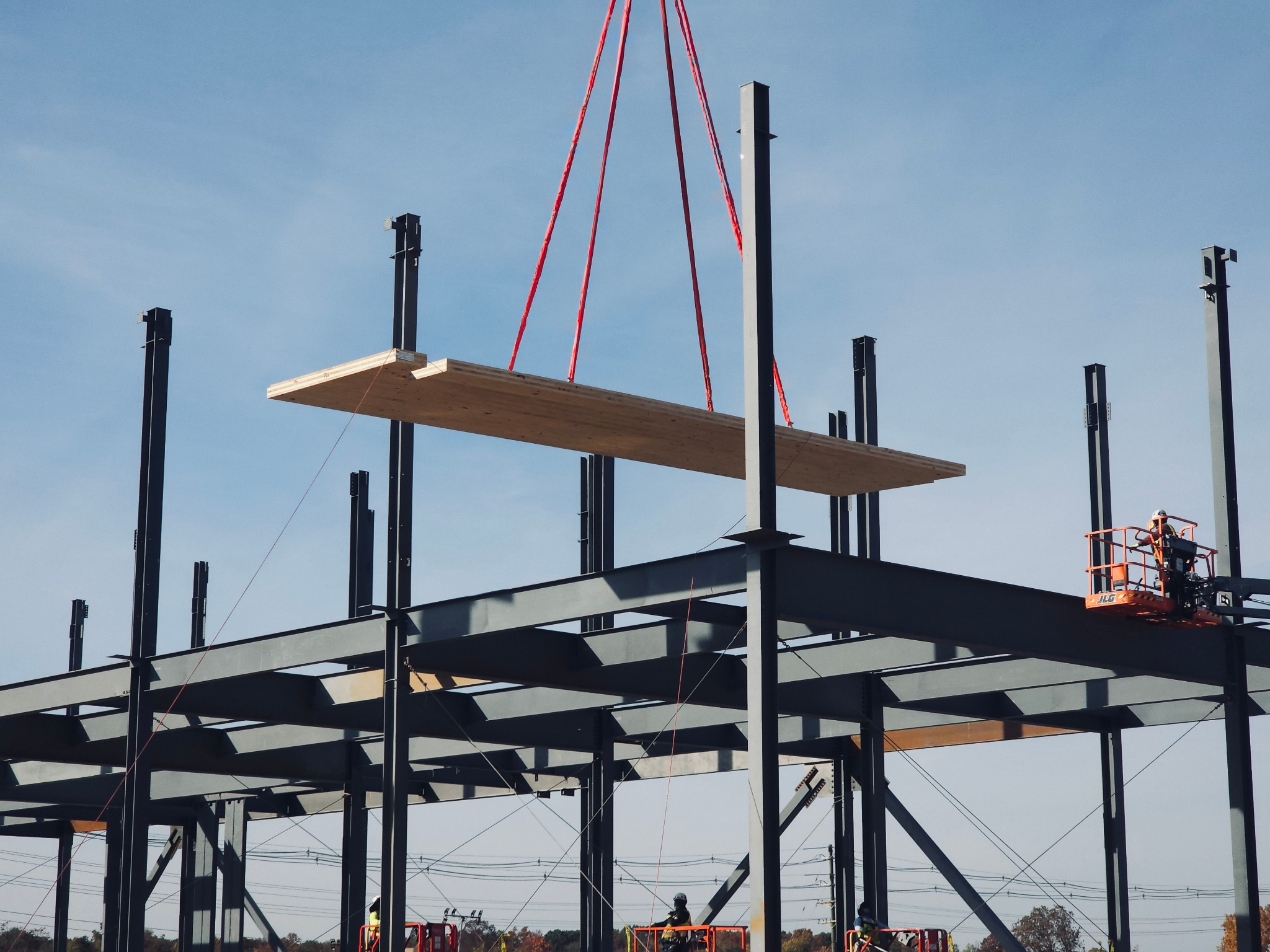
When Erik's team started looking at mass timber for data centers, the obvious first instinct might have been the new Type IV subtypes that were written specifically for mass timber. In practice, Type IV created more problems than it solved.
The reason is air cooling. Most data centers running today use air-cooled systems, which require open plenum space for return air. Type IV doesn't allow a concealed plenum without fireproofing, which eliminates much of the efficiency that makes mass timber worth specifying in the first place. So Type IV and air-cooled data centers don't play well together.
Type III turned out to be the sweet spot. The primary structure doesn't need to be fire rated, which creates efficiency for connections, member sizing, and overall cost. The plenum space stays open. And the team was able to get the necessary square footage through a code variance.
Staying Ahead of a Moving Target
Data center technology is changing fast, and code is changing with it. Air cooling is the norm today, but liquid cooling is coming. Battery storage layouts are evolving, with some buildings centralizing battery rooms and others distributing them across the facility. Every one of those shifts has code implications for ratings, separations, and structural approach.
Erik's advice: stay involved in the discussions happening at the International Code Council (ICC). Don't get caught off-guard by updates. A static code strategy isn't going to hold up across a technology cycle this short.
The code path gets the building built. The next question is whether it still works ten years from now.
Designing for What Comes Next
There's a popular intuition that data centers are a temporary problem. The thinking goes: equipment keeps getting more efficient, so the buildings should eventually shrink or disappear. Moore's Law and all that.
Erik isn't seeing that on the ground. Yes, individual chips are getting more efficient per unit of volume. But the demand for both storage and processing keeps outrunning the efficiency gains, especially with AI. The support equipment around the racks isn't shrinking. So even as the technology itself gets better, the buildings aren't going away. They're just packing more capability into the same footprint.
That changes what future-proofing looks like. The primary job is designing the building to keep working as a data center as the equipment inside it evolves. Beyond that, there's a secondary benefit: a well-designed mass timber shell gives you optionality you don't get with other materials.
Mass timber helps with that in two ways. The first is end-of-life. Mass timber can be disassembled in ways that steel and concrete can't, which means materials can be reused if the building eventually does come down. The second is the building shell itself. A large structural grid and tall ceilings give you a clean, open shelf. Even within the strong design constraints of a data center program, that shell can support a wide range of future uses if the technology eventually shifts to something the building wasn't originally designed for.
Designing for the unknown takes discipline. The other half of getting this right is committing to mass timber from the start.
Commit Early or Don’t Commit
Erik's advice for owners and developers considering a mass timber data center comes back to one thing.
"It's important to commit to it up front. The sooner you can fully commit to a mass timber building and not look back, the more successful it's going to be and the more you'll be able to realize the efficiency that's inherent to the material."
Parallel costing and structural comparisons have their place. But the projects Erik has seen succeed have a team that picked the material, locked it in, and stopped re-evaluating it. The efficiency mass timber offers, in speed, in carbon, in build quality, only shows up when the team designs around the material from day one.
The early data center projects being built in mass timber today are proving the structural and operational case. The next phase is normalizing it. As more of these buildings come online, the precedent gets stronger, and the question shifts from “can mass timber work for a data center” to “why wouldn’t you build one this way.”
If you're exploring mass timber for your own projects, one of the first questions is often: who actually makes the materials?
To help with that, we created a Mass Timber Producer Map featuring 39 North American producers and fabricators. You can explore manufacturers near your project, see the products they produce, visit their websites, and connect directly with them.
👉 Get access to the Mass Timber Producer Map by joining our newsletter!